

23.06.2026
Vaccination programme to protect students from MenB
This includes promoting the wellbeing and independence of working age disabled adults, older people, and their unpaid carers to reduce their need for formal support where appropriate. Where support is needed it should provide people with choice and control of how their care needs are met.
CQC looked at nine areas spread across four themes to assess how well the authority is meeting their responsibilities in order to create their requires improvement rating. CQC has given each of these nine areas a score out of four with one being the evidence shows significant shortfalls, and four showing an exceptional standard.
Score (2 = requires improvement; 3 = good)
How the local authority works with people
Assessing people’s needs – 2
Supporting people to lead healthier lives – 2
Equity in experience and outcomes – 2
Providing support
Care provision, integration and continuity of care – 2
Partnership and communities – 3
How the local authority ensures safety in the system
Safe pathways, systems and transitions – 2
Safeguarding – 3
Leadership
Governance, management and sustainability – 2
Learning, improvement and innovation – 3
Chris Badger, CQC’s chief inspector of adult social care and integrated care, said: “At this assessment, we found South Tyneside Council needed to make improvements in how it provides access to adult social care services to people living in the area.
“Although it had been an unsettling time for staff leading up to the assessment, due to leadership changes as part of a restructure to improve services. Staff were working hard to try and support people. This was increasingly challenging for them as 45% of areas in South Tyneside were among the 20% most deprived in England.
“The experience of unpaid carers was mixed. Some people told us they’d had a quick response to their request for an assessment, whilst others didn’t feel listened to or that their needs were understood. Improvements were also needed to ensure carers were able to take a break from there caring role, to give them a rest and help with their wellbeing.
“We heard people whose first language wasn’t English experienced barriers in getting the information and help they needed. Although translation services were available, more work was needed to ensure people’s needs were met.
“However, the local authority was working well with partner organisation to provide better outcomes for people. We heard about positive experiences from people after they’d been discharged from hospital, either back home or to residential care settings. They felt safe and supported, and there’d been clear communication during the move from hospital.
“Also, the authority had good safeguarding systems and processes in place to make sure people were protected from abuse and neglect. 76% of people who used services felt safe compared to the England average of 71%.
“South Tyneside Council has already identified areas for improvement, including boosting staff morale following a period of change, and has started work to address this. We’ll continue to monitor progress and look forward to seeing how their future plans mature.”
The assessment team found:
However:
The full report can be downloaded here.
South Tyneside Council said it has already made significant progress in addressing the areas of improvement which had already identified, including strengthened oversight of performance and risk, improvements in data quality and reporting, continued investment in prevention, and work to enhance support for unpaid carers. Much of this work was already underway ahead of the CQC visit.
In its statement the authority added that it will continue to work with staff, partners and residents to build on these improvements and deliver high quality, sustainable adult social care services.
 Coun Andy Heywood, Cabinet Member for Adults, Health and Independence at South Tyneside Council, (pictured) said: “We support thousands of residents every year in often complex and challenging circumstances. This report reflects a specific period in 2024/25 and identifies both strengths and areas for improvement.
“We had already identified many of these priorities ourselves and have had a structured improvement programme in place for over two years. Since then, we have continued to make progress, strengthening leadership, improving consistency and delivering better outcomes for residents. It is important to recognise the positive findings in the report, including our work on safeguarding, early intervention, partnership working and the compassionate, person-centred care delivered by our staff.
“We are incredibly proud of our workforce and the difference they make every day in complex and challenging circumstances. Like many councils in this first wave of assessments, we provided feedback on aspects of the process, and we welcome the improvements the CQC is making as it develops its approach. Our focus now is on continuing to build on the progress already made and ensuring people in South Tyneside receive the high-quality care and support they deserve.
“This is a service under pressure, not a service in crisis. Adult social care continues to operate in a highly challenging national context, with rising demand reflected locally with thousands of requests for support each year. We will continue to work closely with staff, partners, providers and residents as we take this forward, with a clear focus on improvement, impact and better outcomes for people in South Tyneside.”
Sources:
https://www.cqc.org.uk/care-services/local-authority-assessment-reports/southtyneside-0626/summary
At South Tyneside and Sunderland NHS Foundation Trust (STSFT), 77% of people are now getting their planned treatment within 18 weeks. This is after their GP refers them on for further care.
This puts the trust above the average for the rest of the region (72%) and well above the national average for the whole NHS (63.5%).
For the past six months, STSFT has also consistently been the third best performing trust in the whole of England. This means people who live in South Tyneside and Sunderland are getting some of the fastest access to planned care anywhere in the NHS.
STSFT has been finding new ways of working more efficiently. It has brought in new digital systems to help book appointments quickly, is using the latest technology in treatments and has added to its diagnostic machines, so more people can be seen for their scans or tests.
Across the NHS, the waiting list now stands at the lowest in three and a half years and has been reduced by half a million people (515,000) since July 2024.
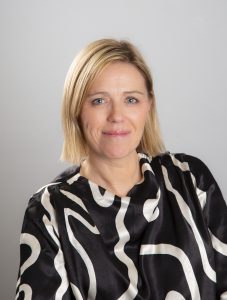 Alison King (pictured),Director of Performance at South Tyneside and Sunderland NHS Foundation Trust, said: “We know that access to care is still the biggest priority for people when it comes to the NHS and these stats show how we are doing from a hospital perspective when people need a planned operation or procedure.
“This is good news for people in South Tyneside and Sunderland because it means we are seeing them faster for their treatment, with less time for their condition to get worse and a quicker recovery.
“Our teams work tirelessly to make sure people get their planned care quickly and they have done this whilst managing through some very busy periods for the NHS. I want to acknowledge their efforts, day-in, day-out and say thank you for everything they do.”
As the NHS looks to a more digital future, STSFT is already leading the way using technology to automate admin processes to sort through GP referrals for planned care.
The Trust is using Robotic Process Automation (RPA) software robots, known as ‘digital workers’, to handle referrals made by GPs more efficiently and save staff time. It means referrals are now available for review by clinical teams within 48 hours of being made by a GP, and in many cases, within 24 hours.
Alison added: “As we look to the future, we want patients to have greater certainty about when they will be seen and technology is key to this. Our automated digital workers are just one aspect of this.
“We also want to improve the way people can access information about their care and how they interact with us via the NHS app.”
It is also getting ready for six days of industrial action by the British Medical Association (BMA), which has announced resident doctors will strike. The action will run after the Bank Holiday weekend, from 7am on Tuesday, April 7, until just before 7am on Monday, April 13.
The Trust is making plans to make sure safe care continues to be offered while industrial action takes place.
It is also urging people to get ready for the Easter Bank Holiday by making sure they have enough prescription medication and a well-stocked medicine cupboard, when there will be reduced access to GP surgeries and pharmacies.
The STSFT emergency departments will remain open around the clock to help in anyone in an emergency.
Its community nursing services will run as usual, including the Care Coordination Hub.
Out-of-ours GP services will accessible across its communities. Surgeries have details in place to help, should an appointment be needed.
The Trust is urging people to make sure they get any repeat prescription requests in within the next couple of days. This will give surgeries time to handle these.
People are also reminded to make sure their medicine cabinets are well-stocked.
Sheena Fish, the Trust’s Lead Divisional Director, said: “Our Emergency Departments are always very busy places and more so during the Bank Holidays. We’re expecting this to continue as the strike action takes place after the weekend.
“We will have safe levels of care available at our hospitals. But we always need to make sure we see those who are most seriously hurt or unwell first. That means anyone else could face a long wait and then still be told to go elsewhere for treatment.
“This is why we’re asking people to think carefully about where they should get help before they come to hospital. Some appointments might need to be rescheduled because of the industrial action but unless you hear otherwise, please still come in for your next visit.”
Anyone who needs advice or to check where is the right place for their care can use NHS 111 Online as a first port of call. In an emergency, they should call 999 or head for their nearest A&E.
Health advice and information is also available via the NHS App or the NHS website or a patient’s GP practice website, which link to a range of online services.
In most cases, people can order repeat prescriptions online. Opening hours for over the weekend can be found through this page: Think pharmacy first
For children’s health advice people can download the Little Orange Book, which offers tips about a wide range of illnesses and conditions. It can be downloaded by clicking here: Little Orange Book
Those looking after children can also visit the Healthier Together website through or can download the app via their phone.
British Sign Language (BSL) speakers can make a BSL video call to 999.
Deaf people can use 18000 to contact 999 using text relay. More details are available via https://999bsl.co.uk/
If you are concerned about how much you, or someone you know, drinks, there’s lots of help available.
Speak to your GP, find your local alcohol support service, or contact Drinkline on freephone 0300 123 1110 or Alcoholics Anonymous on 0845 769 7555.
Nick Flanagan is the Cancer Prehabilitation Team Lead and Digital Allied Health Professional at South Tyneside and Sunderland NHS Foundation Trust (STSFT).
Away from work he is an extreme endurance athlete who takes on Ironman triathlons, ice swims and cross country runs.
The 34-year-old, who lives in South Shields, will face his “biggest test to date” by swimming across the Gibraltar Strait. He will leave Tarifa in Spain, the southernmost tip of Europe, and head for the North African coastline in Morocco, a route of 14.4km (9 miles) at its narrowest point.
Money raised through the feat will go to the cancer fund of the Trust’s STS Charity.
The swim is one of the Oceans Seven, a prestigious marathon swimming challenge consisting of seven gruelling, iconic open-water channel swims.
The strait is one of the busiest shipping lanes in the world. Nick will also contend with the threat of killer whales, great white sharks and jellyfish, along with the wind, cold and cross-currents – all in just his Speedos.
He will set off between today (Monday March 30) and Wednesday April 8, when conditions allow. The Strait of Gibraltar Swimming Association will co-ordinate the crossing, which can take up to six hours to complete.
Two pilot boats will offer support, one for communication and navigation, the other for helping him eat and drink. If he touches one of the boats, he will be disqualified.
Nick said: “Training for the Gibraltar Strait has been unlike anything I’ve ever done, physically, mentally, and emotionally.
“It wasn’t just about getting fit, it was about preparing to move through one of the most unpredictable stretches of water on the planet.
“From long, meditative pool sessions to early morning sea swims, my life became a cycle of aching shoulders, cold water and relentless practice.
“I learned to stay calm when my hands went numb, to fight through headwinds that made me feel like I wasn’t moving and to trust myself when the water pushed and pulled in every direction.
“Strength work, stability training, and endless rotator cuff exercises kept me durable enough to handle the distance, but the biggest challenge was mental.
“Hours alone in open water teach you to sit with discomfort, reset your thoughts, and keep moving no matter what.”
He added: “The moment I knew I was ready wasn’t after a perfect session, it was after a messy, brutal one where I kept going anyway. That’s when I realised I am ready to attempt it.
“Most of my friends, family and swim team think I am crazy to even attempt it, and honestly, I agree.
“However, I strongly believe ‘What is for you, won’t pass you’ and this is my opportunity. It’s also raising money for a fantastic cause.
“All of my support networks have been brilliant in the lead up, but my mam Annette and boyfriend Jamie have been pivotal in helping me prepare.”
STS Charity supports patients, carers, families and staff. Funds buy additional equipment, improve facilities and make sure patients have access to the things that make their time in hospital a little bit better.
The cancer fund within it aims to offer more services and support its patients. This includes specialist rehabilitation programmes, equipment and resources, a better patient experience and life changing health improvements.
In Nick’s role, he leads the development and delivery of the growing Prehabilitation (Prehab) service. This is designed to optimise patients’ physical, nutritional, and psychological wellbeing before they begin cancer treatment.
Nick, who is originally from Waterford in Ireland, is coached by Russell White, an Irish Olympian and Commonwealth athlete. In addition to his own fitness sessions, Nick is a member of Wearside Triathlon and strength trains at Studio H in South Shields.
Anyone who would support his fundraiser can donate via this link: Gibraltar Strait Swim for STS Charity (Cancer Services)
Between September 2024 and December 2025, 10,119 escalation calls were made to Martha’s Rule helplines.
3,457 of these calls helped identify acute deterioration, which led to 1,885 patients receiving changes in treatment, including 446 potentially life-saving interventions to transfer them to enhanced levels of care.
More than 6,000 calls have addressed clinical, communication, or coordination concerns, leading to meaningful improvements in care or system navigation for patients and their families.
Calls via Martha’s Rule helplines have more than doubled since June last year (4,911) as the roll out has been ramped up, with all adult and paediatric acute inpatient sites in the NHS now in the process of implementing Martha’s Rule.
Hospitals have rolled out communications campaigns, including dedicated posters around their wards and buildings, to help raise awareness of Martha’s Rule and ensure the programme is easy-to-understand and that its use is normalised for patients, families and staff.
Martha’s mum Merope Mills said: “The more data that is gathered, the clearer it becomes that Martha’s Rule is having a hugely positive effect. Apart from the lives saved, over a third of the calls have led to a marked improvement in care.
“The process is not being overused and has obviously met a need, giving patients and families real agency. We look forward to its thorough implementation in maternity departments and call for its rapid introduction in Wales and Scotland.”
Dr Aidan Fowler, National Director of Patient Safety at NHS England, said: “Martha’s Rule is already helping to save lives and transform the culture of the NHS – with 10,000 calls made to the helplines in just over a year and over four hundred potentially life-saving interventions triggered.
“These figures show that Merope and Paul’s tireless campaigning and the hard work of staff are helping the NHS listen to families more effectively and shows that when concerns are raised, hospital teams are ready to respond.”
Martha Mills died in 2021 aged 13 after developing sepsis in hospital, where she had been admitted with a pancreatic injury after falling off her bike.
Martha’s family’s concerns about her deteriorating condition were not responded to, and in 2022 a coroner ruled that Martha would probably have survived had she been moved to intensive care earlier.
In February 2024, NHS England began the implementation of Martha’s Rule, following the campaigning of Martha’s parents, Merope and Paul, and a roll-out across 143 pilot sites was announced in May 2024.
The major patient safety initiative in hospitals requires staff to use a structured approach to obtaining information about a patient’s condition from patients and their families at least daily and encourages patients, families and carers to speak to the care team if they notice changes in someone’s condition.
It also provides them with a way to seek an urgent review if their or their loved one’s condition deteriorates – and are concerned this is not being responded to.
Staff can themselves ask for a review from a different team if they are concerned the appropriate action is not being taken.
The roll-out of Martha’s Rule has been made possible by the dedication of Martha’s parents, Merope and Paul, and the hard work of NHS staff across the country, supported by NHS England and the Health Innovation Network’s Patient Safety Collaboratives.
Postnatal care at STSFT was also rated the best in the region at 9.0 out of 10.
The national CQC survey measures how satisfied people are with their maternity care. It looks at people’s experiences of services as they prepared for the arrival of their baby, the delivery and what support they were given following the birth.
The results for STSFT show continued improvement for local maternity services, building on last year’s excellent results. The latest feedback from patients and families shows STSFT is achieving better than expected results compared to the rest of the NHS in England.
One of the biggest areas of improvement is around the support offered from midwives to parents when feeding their baby. The results show families rated their experience in South Tyneside and Sunderland as ‘much better’ than most other Trusts in two key areas:
|
STSFT score
|
National average
|
|
|
Decisions about how to feed a baby were respected by midwives
|
9.8 out of 10
(2024 score 9.1)
|
9
|
|
Advice on feeding being available at evenings, nights or weekends
|
8.6 out of 10
(2024 score 6.5)
|
6.3
|
Local maternity teams also scored ‘better’ than most other Trusts in eight other areas covering all parts of the maternity care pathway. This included getting enough support for mental health during pregnancy, the care received in hospital after birth and many aspects of postnatal care:
|
Better than most other Trusts for:
|
STSFT score
|
National average
|
|
|
Antenatal care
|
Midwives and doctors being aware of medical histories
|
8.1 out of 10
|
7.1
|
|
Getting enough support for mental health
|
9.6 out of 10
|
9.0
|
|
|
Care in hospital
|
A partner or loved one was involved as much as they wanted
|
9.9 out of 10
|
9.5
|
|
Pain management after the birth
|
8.8 out of 10
|
7.8
|
|
|
Postnatal care
|
Getting help from a midwife when needed
|
9.1 out of 10
|
8.6
|
|
Getting information about physical recovery after birth
|
8.0 out of 10
|
6.9
|
|
|
Getting help and advice from midwives about feeding in the four weeks after birth
|
8.2 out of 10
|
7.1
|
|
|
Getting help and advice from midwives about baby’s progress in the four weeks after birth
|
8.5 out of 10
|
7.9
|
|
 Jane Anderson, Director of Midwifery at South Tyneside and Sunderland NHS Foundation Trust said: “We are delighted and reassured that such positive feedback has been given by families who have used our maternity services this year.
“To see such strong results, with some of the best scores across the whole NHS, is testament to our teams and recognition of the care we offer. Our community midwives and hospital teams work very hard to support families and make sure they have a good experience at such a special and important time.
“Colleagues working in all areas of maternity have worked incredibly hard over recent years to improve our service offer and we are very grateful for their support and dedication. We now want to keep improving further with the aim of being excellent in all areas of our care. This feedback is key in helping us to do that.”
South Tyneside and Sunderland NHS Foundation Trust has invested over £6 million over the past two years to upgrade its maternity facilities. The full refurbishment of all 30 delivery suite rooms at Sunderland Royal Hospital will complete in Spring next year.
The 2025 maternity survey involved 119 NHS Trusts in England. To see the full results visit: Maternity survey 2025
Latest news
23.06.2026
Vaccination programme to protect students from MenB

22.06.2026
Hay fever sufferers warned against double dosing during heatwave

22.06.2026
CQC rates South Tyneside Council’s adult social care provision as ‘requires improvement’

07.06.2026
Do you use NHS patient transport services?

31.05.2026
Countdown to opening begins as NHS takes keys for new Sunderland Specialist Eye Hospital

22.05.2026
Protecting your data and respecting your rights campaign
Quick online NHS services

Have your say
Let us know about your recent experience of health and social care services.
Let us know