

21.04.2026
Help others understand health advice and receive a £25 voucher
NHS England will be brought back into the Department of Health and Social Care (DHSC) to put an end to the duplication resulting from two organisations doing the same job in a system currently holding staff back from delivering for patients. By stripping back layers of red tape and bureaucracy, more resources will be put back into the front line rather than being spent on unnecessary admin.
The reforms will reverse the 2012 top-down reorganisation of the NHS which created burdensome layers of bureaucracy without any clear lines of accountability. As Lord Darzi’s independent investigation into the state of the NHS found, the effects of this are still felt today and have left patients worse off under a convoluted and broken system.
The current system also penalises hardworking staff at NHS England and DHSC who desperately want to improve the lives of patients but who are being held back by the current overly bureaucratic and fragmented system.
Health and Social Care Secretary, Wes Streeting, said: “This is the final nail in the coffin of the disastrous 2012 reorganisation, which led to the longest waiting times, lowest patient satisfaction and most expensive NHS in history.
“When money is so tight, we cannot justify such a complex bureaucracy with two organisations doing the same jobs. We need more doers and fewer checkers, which is why I’m devolving resources and responsibilities to the NHS frontline.
“NHS staff are working flat out but the current system sets them up to fail. These changes will support the huge number of capable, innovative and committed people across the NHS to deliver for patients and taxpayers.
“Just because reform is difficult does not mean it should not be done. This government will never duck the hard work of reform. We will take on vested interests and change the status quo, so the NHS can once again be there for you when you need it.”
Sir James Mackey, who will be taking over as Transition CEO of NHS England, said: “We know that while unsettling for our staff, today’s announcement will bring welcome clarity as we focus on tackling the significant challenges ahead and delivering on the government’s priorities for patients.
“From managing the COVID pandemic, the biggest and most successful vaccine campaign which got the country back on its feet, to introducing the latest, most innovative new treatments for patients, NHS England has played a vital role in improving the nation’s health. I have always been exceptionally proud to work for the NHS – and our staff in NHS England have much to be proud of.
“But we now need to bring NHS England and DHSC together so we can deliver the biggest bang for our buck for patients, as we look to implement the three big shifts – analogue to digital, sickness to prevention and hospital to community – and build an NHS fit for the future.”
Incoming NHS England chair, Dr Penny Dash, said: “I am committed to working with Jim, the board and wider colleagues at NHS England to ensure we start 2025 to 2026 in the strongest possible position to support the wider NHS to deliver consistently high-quality care for patients and value for money for taxpayers.
“I will also be working closely with Alan Milburn to lead the work to bring together NHS England and DHSC to reduce duplication and streamline functions.”
Work will begin immediately to return many of NHS England’s current functions to DHSC. A longer-term programme of work will deliver the changes to bring NHS England back into the department, while maintaining a laser-like focus on the government’s priorities to cut waiting times and responsibly manage finances. It will also realise the untapped potential of the NHS as a single payer system, using its centralised model to procure cutting-edge technology more rapidly, get a better deal for taxpayers on procurement and work more closely with the life sciences sector to develop the treatments of the future.
The reforms to deliver a more efficient, leaner centre will also free up capacity and help deliver significant savings of hundreds of millions of pounds a year, which will be reinvested in frontline services to cut waiting times through the government’s Plan for Change.
The changes will crucially also give more power and autonomy to local leaders and systems – instead of weighing them down in increasing mountains of red tape, they will be given the tools and trust they need to deliver health services for the local communities they serve with more freedom to tailor provision to meet local needs.
The number of people working in the centre has more than doubled since 2010, when the NHS delivered the shortest waiting times and highest patient satisfaction in its history. Today, the NHS delivers worse care for patients but is more expensive than ever, meaning that taxpayers are paying more but getting less.
Too much centralisation and over-supervision has led to a tangled bureaucracy, which focuses on compliance and box-ticking, rather than patient care, value for money and innovation. In one example, highlighted by Dame Patricia Hewitt’s 2023 review, one integrated care system received 97 ad-hoc requests in a month from DHSC and NHS England, in addition to the six key monthly, 11 weekly and three daily data returns.
The review also revealed the challenges caused by duplication – citing examples of tensions, wasted time and needless frictional costs generated by uncoordinated pursuit of organisational goals that do not take account of their wider effects.
Substantial reform, not just short term investment, is needed to deliver the government’s Plan for Change mission to get the NHS back on its feet and fit for the future, and this announcement is one of a series of steps the government is taking to make the NHS more productive and resilient so that it can meet the needs of the population it cares for.
 NHS England’s new leadership team, Sir Jim Mackey and Dr Penny Dash, will lead this transformation while re-asserting financial discipline and continuing to deliver on the government’s priority of cutting waiting times through the Plan for Change.
These reforms will provide the structure necessary to drive forward the three big shifts identified by government as crucial to building an NHS fit for the future – analogue to digital, sickness to prevention and hospital to community.
Since July, the government has already taken significant steps to get the NHS back on its feet, including bringing an end to the resident doctor strikes, delivering an extra two million appointments seven months early and cutting waiting lists by 193,000 since July.
Responding to today’s announcement, Healthwatch England Chief Executive Louise Ansari said: “We know people want better access to and experience of care for everyone, in particular those facing health inequalities, including disabled people, carers, and those on low incomes.
“During the forthcoming period of change for NHS England, it’s important that everything possible is done to ensure that patients’ care is not disrupted and that the progress the NHS has been making in some areas is not reversed.
“Going forward, any changes in structures need to have improvements in patient access to and experience of care at their heart.”
Sources:
https://www.healthwatch.co.uk/response/2025-03-13/our-response-nhs-england-reform
While smoking rates have declined in recent years, 11.9% of the population – 6m people in the UK – still smoke. The latest statistics from NHS England show that in 2022-23 there were an estimated 408,700 hospital admissions due to smoking. This means that almost every minute someone is admitted to hospital because of smoking.
It is estimated that smoking costs the country £21.3bn a year in England. This includes an annual £18 billion loss to productivity, through smoking related lost earnings, unemployment, and early death, as well as costs to the NHS and social care of £3bn.
On average, you could save around £2,500 per year by quitting smoking; three-quarters of smokers wish they had never started.
Just a few statistics that should make smokers think twice about quitting on No Smoking Day.
When you stop smoking, there are almost immediate improvements to your health:
Evidence shows that once people have got past the short-term withdrawal stage of quitting, they have reduced anxiety, depression and stress and increased positive mood compared with people who continue to smoke.
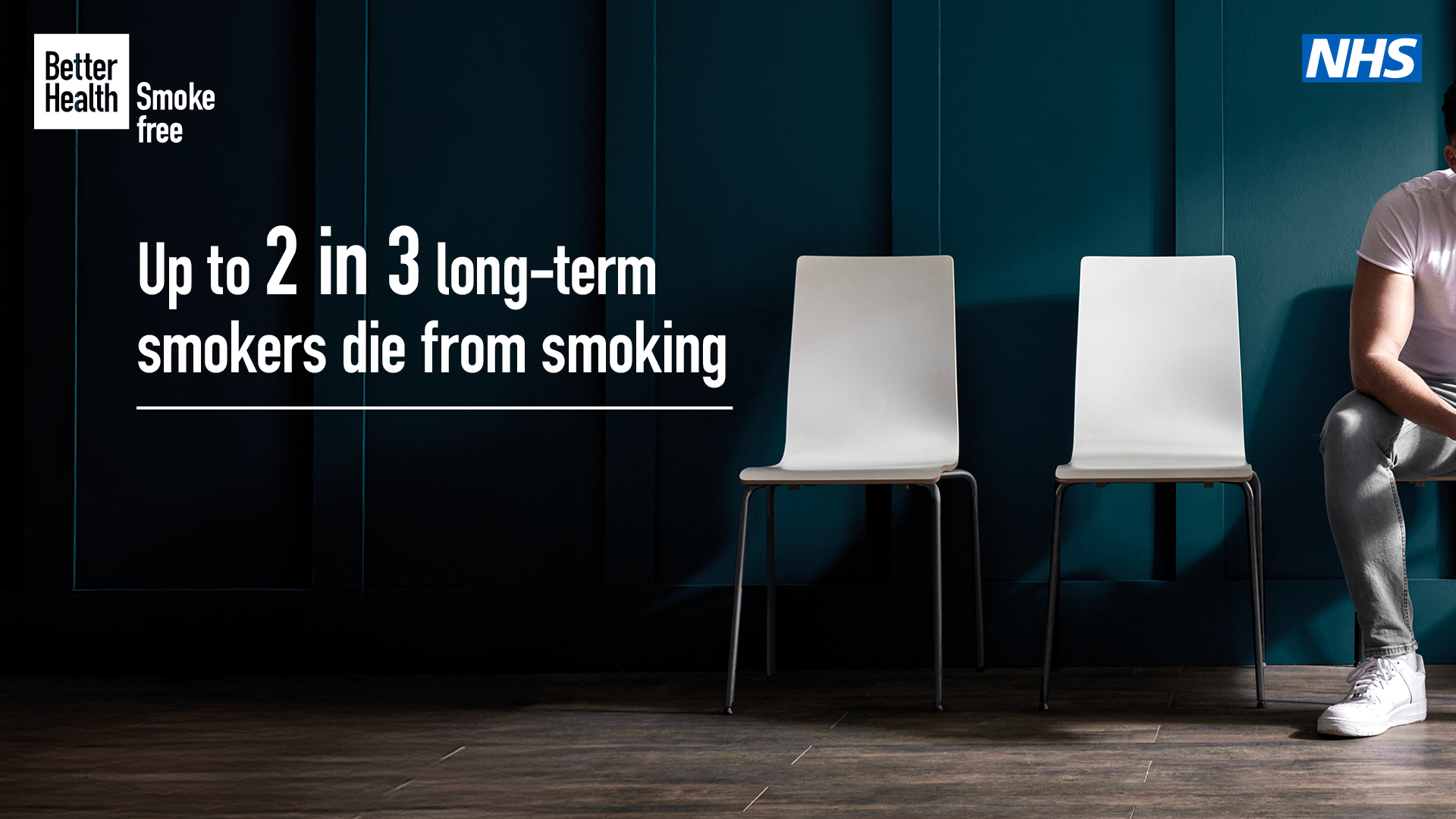
Getting free expert support from your local stop smoking service is proven to give you the best chance of quitting successfully. Some are now able to offer free vape starter kits too.
NHS Better Health offers a range of free quitting support including the NHS Quit Smoking app, Personal Quit Plan, 28-day email programme, local stop smoking service look-up tool, as well as advice on stop smoking aids including information on how vaping can help you quit smoking.
Download the app here:
App Store https://apps.apple.com/gb/app/nhs-quit-smoking/id687298065
Google Play https://play.google.com/store/apps/details?id=com.doh.smokefree&pcampaignid=web_share
The new report – published by the region’s independent Healthwatch network – used a regionwide survey and a series of focus groups to better understand what matters to women about their health.
More than half the respondents pointed to mental health as a key concern, with healthy ageing, bones, joints and muscle health also highlighted. More than four women in ten said that menopause, cancer screening, menstrual and gynaecological health should be high priorities.
The six focus groups who took part included one with women from ethnic minorities in South Tyneside, facilitated by Healthwatch South Tyneside.
Claire Riley, the ICB’s chief corporate services officer and lead for women’s health, said: “We can look at the data and see what services women are using, but there’s no substitute for asking women what they want. We want to make a sustained difference to women’s health, and that means doing more listening.
“Our NHS provides many fantastic services, but we can do better in understanding women’s needs. Many women have told us that they don’t always feel they are listened to or their needs taken seriously. We want to change that, and the Big Conversation will help us understand women’s concerns better.”
The report proposes a new ‘Women’s Promise’ to detail the level of care, dignity and support women can expect, as well as a directory of women’s health services and more options to see a female health professional, get a second opinion or escalate concerns if needed.
New ‘women’s health MOTs’ can provide regular check-ups, screening and a place to raise concerns, while more training in women’s health issues can help GPs and healthcare professionals to raise standards of care.
Samantha Allen, the ICB’s chief executive, said: “I welcome this report and I’m keen to learn from what women have told us. We have made progress in some areas with women’s health hubs, working to improve menopause care and support, and training more primary care staff in contraceptive fitting.
“But we know there is a lot more to do such as better support for conditions like poly-cystic ovary syndrome and endometriosis, more options for postnatal contraception and helping more women in deprived areas get hormone replacement therapy when they need it. If we can make things better for girls and women, everyone benefits.”
Lindsay Graham of North East and North Cumbria Healthwatch Network added: “We’re grateful to every woman who contributed to this project, enabling us to get a brilliant understanding of what is important to women and challenges they face. Listening to these experiences has shown us how much needs to change. This report will help ensure that women’s voices lead to real improvements in healthcare and we’d like to thank the ICB for welcoming our recommendations.”
The region’s NHS kicked off its women’s health programme last year by opening women’s health hubs in Sunderland, Gateshead and North Cumbria, while the ICB also signed up to the Menopause Workplace Pledge to better support the many NHS staff who are affected by menopause symptoms. In addition, Newcastle Hospitals NHS Foundation Trust is investing in a fourth mobile breast screening trailer, to improve access to screening in rural areas.
Download the full report: https://www.healthwatchsouthtyneside.co.uk/wp-content/uploads/2025/06/NENC-HW-Womens-Health-Report-FINAL.pdf-1.pdf
Healthwatch South Tyneside is looking for an enthusiastic and community-minded Engagement and Insight Officer to help ensure residents have a say in the health and social care services they rely on.
This is a part-time role (24 hours per week) and the salary is £25,500 pa (pro rata).
✔ Make a real impact in your community
✔ Work with a passionate team dedicated to improving people’s lives
✔ A rewarding role where every conversation can lead to positive change
Download the job pack via the links below:
Engagement and Insight Officer – job ad
Engagement and Insight Officer – job description
Engagement and Insight Officer – application form
Engagement and Insight Officer – equal opportunities monitoring form
Closing date: 7 April 2025
People who have experienced a traumatic event can be reluctant to engage with health and care services, seek medical attention when they get unwell, and avoid vital check-ups.
According to a nationally representative poll of 3,571 adults living in England, nearly a fifth, 18%, of respondents who have experienced trauma said they ‘very often’ or ‘fairly often’ avoid services because of their trauma. This figure is much higher for autistic people and people who have Attention deficit hyperactivity disorder (ADHD)/Attention deficit disorder (ADD): 41% and 37%, respectively.
People who have experienced trauma don’t feel comfortable disclosing the information to medical professionals:
The UK Trauma Council defines trauma as: ‘the way that some distressing events are so extreme or intense that they overwhelm a person’s ability to cope, resulting in lasting negative impact’. A traumatic event can include being in an accident, experiencing an act of violence, and seeing someone die.
The HWE research provides further evidence that trauma is widespread. More than half, 55%, of respondents chose the statement “I have experienced trauma in the past”, and nearly one in 12, eight per cent, chose “I’m currently experiencing trauma.”
According to our estimates, this equates to about 25 million and 3.7 million adults living in England, respectively.
Women, autistic people and those who have ADHD were more likely to experience trauma. Around two-thirds, 67%, of female respondents said they had experienced a traumatic event, compared to 51% of male respondents.
We have called for tangible solutions to help people who have experienced trauma engage with healthcare, including piloting trauma cards.
Our research follows a pilot project run by Healthwatch Essex in 2022, which made trauma cards available to local people to use during their NHS appointments. The pocket-sized card explains that the holder has experience of trauma and links to further resources to help provide sensitive, appropriate care.
The pilot was hugely successful, showing that a simple intervention can make it easier for people who have been through trauma to get the care they need.
Our polls shows that of the estimated 3.7 million people currently experiencing trauma, 43% would be likely to use a trauma card. Of the estimated 25 million people who have experienced trauma in the past, around one in three (30%) would be likely to use a trauma card. This equates to about 1.6 million people and 7.4 million people, respectively.
Laura (not real name), 60, from Tendering, has suffered from anxiety about NHS appointments that involve personal examination due to non-recent trauma of sexual violence. This has led her to either cancelling, missing or leaving NHS appointments, including a cervical cancer screening. However, when she does attend a medical appointment, certain sounds and sights trigger memories, affecting her behaviour and relationship with healthcare staff.
She said: “I don’t take in information and will ask for information to be written or in leaflet forms to support this.”
Laura recently used the trauma cards developed by Healthwatch Essex for her personal examination. “The procedure was made easier by presenting the trauma card, and it made me feel more relaxed. It empowered me. This gives me hope that I will have a good experience again,” she said.
HWE Chief Executive Louise Ansari said: “A traumatic event can lead to long-lasting health issues affecting a person’s quality of life. Our findings paint a very worrying picture, with one in five people avoiding healthcare because of their trauma.
“When people avoid healthcare, their condition can deteriorate, and their illness can last longer. But for vulnerable people, including those who have trauma, avoiding healthcare can lead to even greater impacts.
“The pilot project in Essex has shown trauma cards can improve experiences for people using health and care services, empowering them and facilitating communication with healthcare staff. With training and better awareness, trauma cards can become a helpful tool for both the patient and medical staff.
“We are calling for NHS England to support a national evaluative pilot of a trauma card initiative. People across England should be able to order a trauma card and have it delivered to them for free, along with an information sheet that clearly explains how and when they can use it. In the long term, and subject to the pilot results, a digital trauma card could be added the NHS App or smartphone wallets.”
Estimated population figures calculated by Healthwatch England using the ONS figure for the adult population of England of 45,691,677. As this is a representative poll of adults in England, we can extrapolate population figures from the percentages.
About the poll
All figures, unless otherwise stated, are from YouGov Plc. The total sample size was 3571 England adults. Fieldwork was undertaken between 3 – 4 October 2024. The survey was carried out online. The figures have been weighted and are representative of all England adults (aged 18+).
The first guest speaker Anna Hargrave, Divisional Director of the Division of Community Services, provided an overview of the Urgent Care in the Community service.
Her presentation covered Urgent Community Response, Virtual Wards (Hospital @ Home), Fast Track Palliative Care, Fast Track Discharge to Assess and the new Care Co-ordination Hub launching in April.
David Newell, Directorate Manager, introduced a presentation on mental health services by Clinical Team Managers Karen Kinghorn and Paula Wake, and Clinical Lead Lisa Mundell. It included how to access support through the Healthy Minds Team, Getting Help Children and Young People’s Mental Health team and through Adult Talking Therapies.
Nicola Price, Practice and Assurance Manager at South Tyneside Council, then shared an update on the support available through adult social services, including short-term and long-term care, assistive technology, transport and personal assistants.
Each presentation was followed by a Q&A session, giving members of the public an opportunity to ask questions.
Chair of Healthwatch South Tyneside, John Lowther, (pictured) said: “It was fantastic to see such a strong turnout from both the people of South Tyneside and borough healthcare professionals.
“It was a valuable opportunity for residents and healthcare professionals to collaborate, network and work together to improve and learn from health and social care services across South Tyneside.
“I’d like to extend my sincere thanks to all three of our guest speakers for their insightful and informative presentations. We are grateful to everyone who attended and contributed to the discussion, an excellent way to engage service users to provide the valuable feedback which influences the design of future services.”
Members of the public who attended left feedback which Healthwatch will use to help plan similar future events.
“It was a good event, with lots of information. I thought the three presentations re mental health just repeated themselves and why can’t there be just one telephone number to contact the service instead of different number, like the care in the community. Lots of information to take in. It was hard to stay focused so would suggest not as many speaker’s next time. Nice, comfortable venue with plenty of free parking spaces.”
“I attended a South Tyneside Healthwatch public meeting as a member of the public, and it was incredibly insightful. It was particularly pertinent to my current personal situation, as I was able to learn about various services that I wasn’t previously aware of. The event provided a great opportunity to highlight services that could be of real benefit to me and my family. One of the clinicians even took the time to speak with me personally after the presentation, which was a valuable opportunity. Their advice and the additional signposts they provided will help me better support my daughter moving forward.”
“The Healthwatch public meeting provided some high quality information on services and projects local to the area. People’s issues were listened to with respect and taken on board by the speakers. The venue was fine for the event with good access. The only minor change I would suggest would be to have probably one less speaker to retain public concentration throughout. I look forward to more events in the future very well organised by the team much appreciated.”
“I loved all the presentations, they all gave out so much information and were very clear and informative. Your hospitality was amazing.”
“Your Voice Counts are excellent in putting information in an Easy Read format. They do this for many voluntary and statutory organisations. I would encourage you to connect with the group.”
The presentations can be downloaded via the following links:
Latest news
21.04.2026
Help others understand health advice and receive a £25 voucher

20.04.2026
Tell us about your experience of hospital discharge
16.04.2026
Athletics legend Steve Cram inspires NHS staff to get active

08.04.2026
Bereaved families invited to take part in new research study

08.04.2026
New mental health support service for LGBTQ+ young people aged 11–25

07.04.2026
Young people waiting up to two years for mental health support
Quick online NHS services

Have your say
Let us know about your recent experience of health and social care services.
Let us know