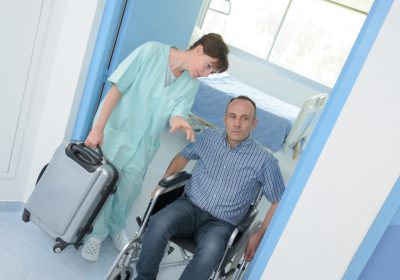
Praise came from many respondents for the kindness and compassion shown by the staff in the Discharge Lounge at South Tyneside Hospital and the quality of care patients received there.
But a number of people taking part in our survey complained about waiting for meds when ready for discharge and a feeling some described of the discharge process being ‘rushed’ – ostensibly to free up beds.
The wide range of responses received would suggest contrasting experiences of the discharge process and clear areas for potential improvement to ensure a more consistent positive outcome for patients and their relatives/carers:
- Two-thirds said they felt involved in decisions made for their discharge from hospital but a third didn’t – contrasting feedback ranging from ‘excellent’, ‘amazing’ and ‘very informative’ to ‘I didn’t feel safe to go home’ and ‘my daughter was discharged without any paperwork’.
- Just over half (50.6%) said they felt involved in their care plan but more than a third (37.7%) said they didn’t, with comments ranging from ‘family members who had concerns…were invited to an MDT meeting’ to ‘I didn’t have one’.
- While more than half (58.2%) said they were given the opportunity to discuss with a member of staff any worries or fears about their discharge, more than a third (35.5%) said they weren’t. Comments ranged from ‘I was scared and the staff talked me through everything, putting my mind at rest’ to ‘not completely as the discharge process seems very rushed’.
- More than half of respondents (51.3%) said they were given a contact number to call on the day of discharge if they had any concerns but again almost a third (30.3%) said they weren’t.
- A decent majority (60.3%) described their overall discharge experience as either very good or good, while a fifth 20.5% said it was either poor or very poor and 19.2% described it as fair.
The comments left reinforced the huge difference in the experiences patients had.
One said ‘the whole procedure was seamless, we couldn’t fault’ while another wrote ‘I was in a lot of pain and…I felt that the discharge procedure was a tick box exercise to get me off the ward and the nurse was following a leaving hospital checklist’.
Another patient described spending 11 hours in A&E with low oxygen levels before, after an overnight stay in the Emergency Ward, being left four hours in a corridor from where they were discharged. The patient described this as ‘the most humiliating and degrading experience of my life’.
A different respondent said they ‘felt hurried’ and were asked how they were getting home while another reported waiting seven hours from 10am to 5pm for medication.
Mixed reviews also came for the time spent in the Discharge Lounge, with more than half (57.8%) waiting less than an hour but nearly a quarter (24.4%) waiting more than two hours. An overwhelming majority (83.7%) said they were treated with kindness and compassion by the staff in the Discharge Lounge with only two respondents saying they weren’t.
The follow up question which asked overall how happy patients were with the care received in the discharge lounge again had an overwhelmingly positive view expressed with 82.9% describing it as very good or good compared to 8.5% responding poor or very poor.
There were a range of comments left, with positive feedback including ‘the discharge process was very thorough – all medication was prepared for us to take home’ and ‘the Discharge Lounge more than serves its purpose’.
Negative comments included ‘you can be told that you are being discharged in the morning but it could be late afternoon by the time your medication is prepared’ and ‘I was sent home in severe pain and without any medication and ended up in the RVI for four weeks’.
Report recommendations
Recommendations in our Hospital Discharge report based on the patient/relative feedback included improving the understanding of the discharge process by ensuring all patients receive a copy of the ‘One Step Closer to Home‘ booklet on admission – more than three-quarters (76%) of respondents said they didn’t.
There appeared to be a varying quality in the communication patients/carers received about the discharge process and we suggested a centralised discharge team was deployed to ensure consistency and take pressure off ward staff.
We found that any way of improving communication/planning between the wards discharging patients and the dispensing pharmacy so they do not face lengthy waits in the Discharge Lounge would undoubtedly improve the patient experience.
The report also notes the advice from the Patient Transport Service on the importance of hospital staff making booking patient transport a priority when arranging for a patient to be discharged to prevent them having long waits and providing as much patient information as possible to assist with a comfortable and safe transition from hospital into their home.
We have not yet received a formal response from South Tyneside and Sunderland NHS Foundation Trust.
Download our hospital discharge report here.