

21.04.2026
Help others understand health advice and receive a £25 voucher
They include a digital platform available in South Tyneside which features more than 300 exercise videos to support recovery from musculoskeletal conditions. Patient feedback will drive improvements, and the service will integrate with existing clinical records.
This work is part of the region’s £19m WorkWell programme, which brings together the NHS and a wide range of partners to help people address health problems that may be affecting their ability to work or return to work. The programme offers additional support for issues such as depression and anxiety, back problems, alcohol or smoking, and gynaecological concerns, which can all make it harder for people to stay in employment.
Approximately £1.5m of WorkWell funding will now be used to pilot the six innovations, testing whether patients can benefit from these latest technologies to help improve their health.
The bids were carefully evaluated by an expert panel, supported by Health Innovation North East and North Cumbria (HI NENC) and the NHS North East and North Cumbria Integrated Care Board (ICB).
The six successful proposals are:
The WorkWell programme is led by the region’s NHS in partnership with Health Innovation North East and North Cumbria, local councils and combined authorities, the Department for Work and Pensions, and voluntary, community and social enterprise (VCSE) organisations. The North East and North Cumbria is one of only three areas in England to receive funding through the Government’s Health and Growth Accelerator scheme.
Samantha Allen, chief executive, North East and North Cumbria ICB, said: “Supporting people to stay well and in work is a key priority for our region. These digital innovations will give people faster, easier access to help that can make a real difference to their health and daily lives. By working closely with our partners, we’re using new technology to improve care, widen access, and make the best use of NHS resources for the benefit of our communities.”
Dr Nicola Hutchinson, chief executive, HI NENC, said: “We are delighted to be backing six outstanding companies whose innovations have the potential to transform how people manage their health. This investment means we can bring proven, practical digital solutions into NHS services more quickly, helping people across our region to stay well, feel supported, and remain in work. It’s a great example of how collaboration and innovation can drive real change.”
HI NENC is now working with WorkWell services across the region to roll out these innovations. Patients can only access these innovations through NHS WorkWell services.
You can find out more about the innovations on the Health Innovation North East and North Cumbria website, and more about the wider WorkWell programme on the ICB website.
Only 35% of people with a learning disability across the region have already had their flu vaccine this winter – leaving too many still unprotected.
Dr Catherine Monaghan, respiratory consultant and medical director, NHS North East and North Cumbria Integrated Care Board (ICB), said: “Flu is not just a bad cold. It can make people very unwell and can lead to pneumonia, breathing problems and, in the worst cases, it can be fatal.
“People with a learning disability are much more likely to have other health needs, making flu much more dangerous for them. The vaccine is a safe and simple way to protect yourself and others – it can stop serious illness, help you avoid having to go into hospital and, most importantly, it can save lives.”
The latest ‘Learning from Lives and Deaths, People with a Learning Disability and Autistic People’ (LeDeR) report, showed that almost a quarter of avoidable deaths, in people with a learning disability, were caused by breathing illnesses, proving just how important flu protection is.
Anyone on the learning disability register and their carers can get a free flu vaccine at their GP surgery or local pharmacy. It can also be booked through the NHS App or by calling 119.
Dr Monaghan added: “The flu vaccine is quick, safe and free – and available now! You can have a family member, friend or carer with you when you have your vaccine and your GP or pharmacist can also offer reasonable adjustments, like a quieter room or extra time, to help make the appointment less stressful.
“Please don’t put it off – getting your flu vaccine is one of the best ways to help you stay well this winter.”
Flu vaccines are also free for people aged 65 and over, pregnant women, adult care home residents, frontline heath and care staff, carers, people with long-term health conditions, close contacts of anyone who is immunosuppressed, children aged 2–3 and school-aged children up to Year 11. Many children will be offered a simple nasal spray instead of an injection.
COVID-19 vaccinations are available free for over 75s, care home residents and people who are immunosuppressed.
Student Daniel explained why he gets the flu vaccine every year: “It stops me from getting really ill. “It’s safe, and just a quick prod with the needle and it’s done. It doesn’t hurt, and it means that I am protected from flu.”
Judith Thompson, learning disability network manager for the NHS North East and North Cumbria, added: “By getting your flu jab, you’re protecting yourself, your friends, your family and your community. Please book now – flu can be very serious, but the vaccine gives the best protection.”
The 23 centres across the North East and North Cumbria include:
They provide appointments to diagnose and treat urgent dental issues and conditions, but do not offer routine dental care, like check-ups.
The 23 centres will offer almost 109,000 urgent dental appointments every year. A limited number of 30-minute appointments will be available at each centre daily, with priority given to people with the greatest clinical needs.
Appointments can be booked using the online booking system on the ICB’s website: https://northeastnorthcumbria.nhs.uk/here-to-help-you/nhs-dentistry
Anyone struggling to book an appointment at an Urgent Dental Access Centre can seek help via NHS 111. The centres do not offer a walk-in service so appointments must be booked.
Patients can access urgent dental care if they have:
They can also ask for an urgent dental appointment if they are worried about conditions like:
Anyone can use a UDAC if they have one or more of the urgent problems listed above and:
Patients can visit any of the 23 UDACs in the network, not just the one closest to them. Normal NHS charges and exemptions apply.
For more information on North East and North Cumbria Integrated Care Board’s plan to improve oral health and increase access to NHS dental care across the region, visit: https://northeastnorthcumbria.nhs.uk/here-to-help-you/nhs-dentistry.

Contact an NHS dentist
NHS dentists provide routine dental care and urgent care appointments during their normal working hours. Patients should contact their regular dentist if they have one or they can find an NHS dentist at https://www.nhs.uk/service-search/find-a-dentist. If patients have an urgent care issue and cannot get an appointment with an NHS dentist, they can contact the services below. See appendix 1 for the criteria for urgent care appointments.
Contact dentists that have extra urgent appointments
Selected dentists across the region have extra urgent appointments. A list of contact details for those practices can be found on the ICB’s website at: https://northeastnorthcumbria.nhs.uk/here-to-help-you/nhs-dentistry Patients can ask for an urgent appointment at any of the practices listed. The number of urgent appointments available at each practice will vary across the days and weeks, so we cannot guarantee an appointment will always be available.
Book an appointment at an urgent dental access centre
Urgent dental access centres offer appointments to diagnose and treat urgent dental problems. Patients can book their own appointment at an urgent dental access centre at https://northeastnorthcumbria.nhs.uk/here-to-help-you/nhs-dentistry.
Contact NHS 111 for urgent care
Patients should contact 111.nhs.uk or call 111 if they cannot find an urgent appointment with any of the NHS dental services above and they have:
The NHS 111 health advisor will talk to the patient about their needs. If they do not need help right away, the health advisor will give the patient advice on how to treat the problem themselves until they can get an appointment. If the patient does need urgent help, NHS 111 may be able to find them an appointment during normal working hours at an urgent dental access centre or at an out-of-hours treatment service. Most general hospitals do not have an on-call dental service for dental pain so patients should visit 111.nhs.uk or call 111 for emergency dental care.
Patients should only go to A&E or call 999 if they have:
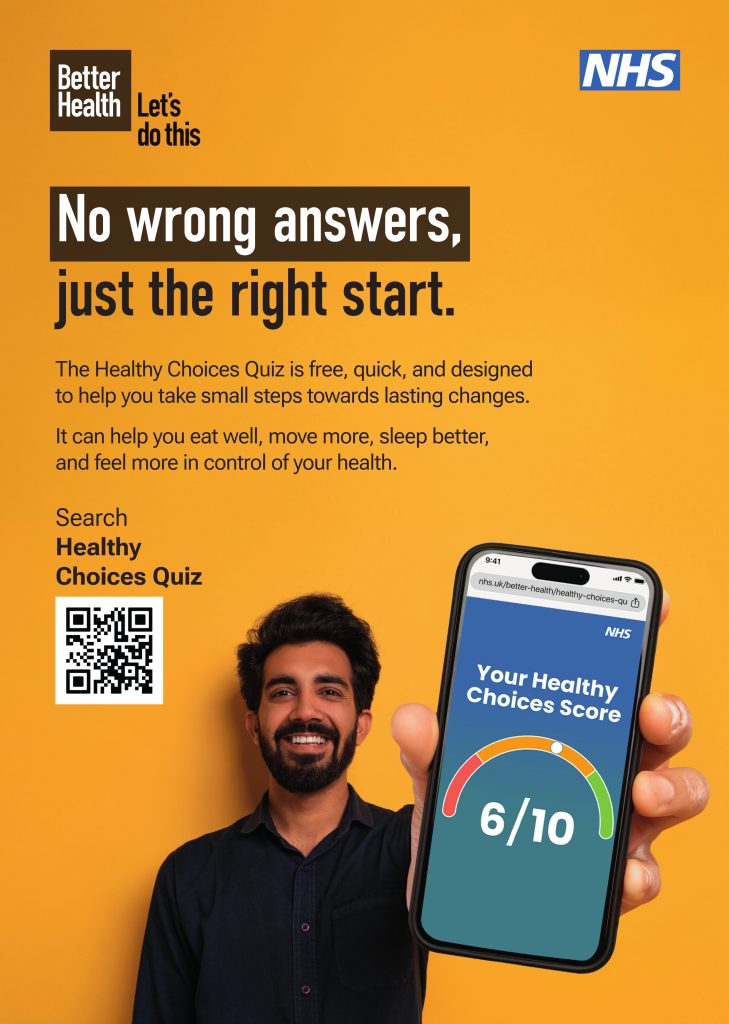
You’ll receive an overall score based on your answers which indicates how your lifestyle could be affecting your health and wellbeing. You’ll also be directed to guidance and advice for areas you could improve including a range of free NHS apps and tools.
From a nine-week running programme for absolute beginners to an anxiety-reducing email programme, the NHS has a range of support on offer.
So whether you want to eat better, move more or sleep deeper, the Healthy Choices Quiz can be your first step towards a healthier you.
 Why the quiz has been launched
Preventable health conditions are costing lives, burdening the NHS and damaging the economy. More than a quarter of the population now have a long-term health condition, and health inequalities are also widening – people in the most deprived areas of England die eight years younger and spend 19 fewer years in good health than those in the least deprived areas.
Key risk factors such as smoking, obesity, drinking alcohol and mental health problems affect millions of people. But making small changes to the way we live day to day can have a big impact on our health in the immediate and longer-term.
The Department of Health and Social Care and the NHS want to empower people across the country to make positive changes for their health through engaging with their tools and support.
The Healthy Choices Quiz provides an easy first step for those who want to feel healthier but may not know where to start. After capturing some basic demographic information and exploring different health motivations, the quiz asks a series of lifestyle questions across six main themes: movement, eating, alcohol consumption, smoking and vaping, mental health and sleep. Users will then receive an overall score out of 10 based on their answers.
This score indicates how their lifestyle could be affecting their health and wellbeing and how they are doing in each lifestyle area. Most importantly, it recommends what to do if they should need to make any changes. This includes directing them to NHS apps, advice and resources to help them get going with confidence.
Users can also sign up to an email programme to get additional information and support on key lifestyle areas straight to their inbox. You will not be asked about your medical history as this is not a medical assessment.
Upon completion, the quiz signposts users to relevant information and support, including our suite of free digital behaviour change tools. These have proven results and already support millions of people every year:
Active 10
A tool to encourage users to record and increase daily brisk walks
Couch to 5K
A running programme for absolute beginners
Quit Smoking
Personalised support to help users quit smoking for good
Drink Free Days
A tool to help users cut down on alcohol by tracking drink free days
The Mind Plan
An action plan and email programme with support from mental health experts
Take the free NHS Healthy Choices Quiz here: https://www.nhs.uk/hcquiz
Being a parent is full of joyful moments, but it also comes with natural questions and concerns. Best Start in Life brings together trusted guidance, practical tips and useful tools in one easy-to-access place. It’s your go-to website for everything from health and wellbeing to childcare and early education.
How to access support:
Best Start in Life is the cornerstone of ‘Giving every child the best start in life’ – the government’s strategy for improving child health and development and meeting the ambition that 75% of five-year-olds in England have a good level of development by 2028, as set out in the Plan for Change.
Visit the website at BestStartinLife.gov.uk
South Tyneside and Sunderland NHS Foundation Trust has put plans in place to make sure safe care continues to be offered while industrial action takes place.
It has issued a call for people to play their part in supporting healthcare services during this time by only using emergency care when really need.
NHS 111 Online offers advice 24/7 and can direct people where to seek treatment and support.
GP surgeries will remain open and pharmacies are also a source of help and advice.
Sheena Fish is Divisional Director for Operations. She said: “Our Emergency Departments are always very busy, particularly as we approach winter. We’re expecting them to be under even greater pressure during this time of industrial action.
“We will have safe levels of care available at our hospitals. As ever, we will need to prioritise treatment for those who are most seriously unwell or injured. That means anyone else could be waiting a long time and then might still be asked to seek treatment elsewhere.
“That is why we are asking people to think where they need to seek help before coming to hospital. We have rescheduled some appointments as we prepared for industrial action. Unless you have heard otherwise, please still come for your visit.”
NHS 111 Online offers a symptom checker. It can guide people to the service they need, while self-care advice is available online from the NHS at nhs.uk.
Details of pharmacies can be found on this page: Find a Pharmacy
Anyone needing help for their mental health can visit this page: Check your mental health symptoms
Latest news
21.04.2026
Help others understand health advice and receive a £25 voucher

20.04.2026
Tell us about your experience of hospital discharge
16.04.2026
Athletics legend Steve Cram inspires NHS staff to get active

08.04.2026
Bereaved families invited to take part in new research study

08.04.2026
New mental health support service for LGBTQ+ young people aged 11–25

07.04.2026
Young people waiting up to two years for mental health support
Quick online NHS services

Have your say
Let us know about your recent experience of health and social care services.
Let us know