

21.04.2026
Help others understand health advice and receive a £25 voucher
 Called ‘Guiding You Home’ it aims to support as many patients as possible who have an urgent health or care need to receive that care as close to home as possible, as part of neighbourhood working.
The initiative is designed to ensure that people are given the right care in the right setting from the point of preparing for hospital discharge, through home-based services and ‘returning to independence’ beds.
‘Home first’ will be promoted as the priority, with the questions asked ‘why not home?’ and ‘why not today?’
The partnership behind Guiding You Home includes South Tyneside and Sunderland NHS Foundation Trust, South Tyneside Council, Sunderland City Council and North East and North Cumbria Integrated Care Board.
Ward teams including doctors, nurses, therapists, discharge nurses and social workers will liaise with patients and carers to discuss discharge arrangements early in their hospital stay. This multi-disciplinary discussion will support the patient’s wishes and challenge assumptions that a care facility is best, coordinating a health and care response to support the patient home where possible.
As part of the research and consultation process a short online survey has been launched to ask patients and carers what care and support they would like to see in place to enable them to return to their own home rather than going into a care home.
It also asks what type of support and reassurance carers would need to help them support their relative/friend going home after a period in hospital.
The survey can be completed at https://www.surveymonkey.com/r/7VFKYPC
From now on, GP practices will start to offer children a combined MMRV vaccine at 12 months and 18 months of age to add chickenpox to the protections against measles, mumps and rubella.
Chickenpox is a common infection in children that spreads easily. It is usually mild but it can lead to serious complications which need hospitalisation, including chest infections and fits.
Children will now be offered protection against chickenpox following a recommendation from the Joint Committee on Vaccination and Immunisations, with a combined MMRV vaccine replacing the MMR vaccine to protect against measles, mumps, rubella and chickenpox.
Research shows that chickenpox in childhood results in an estimated £24m in lost income and productivity every year in the UK and, alongside cutting this, the rollout is expected to save the NHS £15m a year in costs for treating the common condition.
Dr Claire Fuller, National Medical Director for NHS England, said: “This is a hugely positive moment for children and their families, providing protection against chickenpox for the first time and adding to the arsenal of routine vaccinations we give to children to safeguard them against serious illnesses.
“From now, the combined vaccine to protect against measles, mumps, rubella and chickenpox will be available at children’s routine vaccination appointments to keep children healthier and prevent sickness from these highly contagious viruses. The new vaccine will also help the health service move its focus from sickness to prevention and keep more children safe and in school.”
The latest data indicates that half of children will contract chickenpox by the age of four, and 90% by the age of ten.
Children who catch chickenpox are typically advised to stay off school until all spots have formed a scab, which is usually five days after the spots appear. The new vaccine will mean children miss fewer days in nursery or school and reduce time parents need to take off work to care for them.
Health Secretary Wes Streeting said: “Today marks a historic milestone in protecting our children’s health – for the first time, the NHS is offering chickenpox vaccination as part of our routine childhood immunisation programme.
“Many families have faced the threat of chickenpox, which can cause serious complications. The disease also brings significant worry and disruption, with children missing nursery or school and parents forced to stay home to look after them.
“This new protection will give parents reassurance that their children are protected from a disease that sends thousands to hospital every year. Families will save both time and money – no longer facing lost income from taking time off work or having to fork out for private vaccinations.
“We are determined to give every child the best start in life. I urge all parents to take up this offer when their GP contacts them – vaccines save lives.”
Children born on or after 1 January 2025 will be offered two doses of the MMRV vaccine at 12 months and 18 months, while children born between 1 July 2024 and 31 December 2024 will be offered two doses at 18 months and three years four months.
Children born between 1 September 2022 and 30 June 2024 will be offered one dose at three years four months, and the NHS is also planning a single-dose catch-up programme later in the year for older children born between 1 January 2020 and 31 August 2022.
Two doses of the MMR vaccine were previously offered to children at 12 months and at three years four months of age but the second dose will be brought forward to 18 months for children born on or after 1 July 2024 to provide them with earlier protection.
Dr Gayatri Amirthalingam, Deputy Director of Immunisation at the UK Health Security Agency, said: “Most parents probably consider chickenpox to be a common and mild illness, but for some babies, young children and even adults, chickenpox can be very serious, leading to hospital admission and tragically, while rare, it can be fatal.
“Beyond the health risks, chickenpox also places a significant burden on families. Parents often need to take time off work to care for their sick child, and children miss valuable time at school or nursery.
“With a vaccine now being introduced into the NHS Childhood Vaccination programme starting today, I hope parents will make it one of their new year resolutions to ensure their child takes up the offer, when invited. As the vaccine is a combined vaccine with MMR, your child will be protected against four serious diseases – measles, mumps, rubella and chickenpox.
“This vaccine has been used extensively for many years in a number of countries and has been shown to be highly effective with a good safety profile. The programme will have a really positive impact on the health of young children.”
The combined MMRV vaccine has been safely used for decades and is already part of the routine vaccine schedules in several countries, including the United States, Canada, Australia and Germany, which have all seen substantial decreases in cases and related hospital admissions since introducing their vaccination programmes.
Local GP surgeries will be contacting families from today to let them know when they are due their vaccinations and can book their child for their appointment, usually by letter, text message, phone call or email.
The Royal College of Paediatrics and Child Health’s President, Professor Steven Turner, said: “It is welcome news that a chickenpox vaccine is now being rolled out across England and the whole of the UK in order to protect children and young people. Vaccinations are proven to be a very effective way to protect children’s health and prevent serious illness. Making sure your child is vaccinated is a vital step for parents and carers in keeping them safe.”
All other regions in England have been covered under a yellow alert for this period. This has since been extended until 10am on Tuesday January 6.
Expected low temperatures are likely to result in increased use of health care services by vulnerable people.
There will also be an increase in risk to health for individuals aged 65 years and over, those with pre-existing health conditions (including respiratory and cardiovascular diseases) and some other vulnerable groups, such as those sleeping rough.
UKHSA has published guidance for professionals protecting vulnerable people and for the public on staying safe during periods of cold weather.
Dr Agostinho Sousa, Head of Extreme Events and Health Protection at UKHSA, said: “As the colder weather sets in it is vital to check in on friends, family and neighbours that are most vulnerable.
“The forecasted temperatures can have a serious impact on the health of some people, leading to increased risk of heart attacks, strokes and chest infections, particularly for individuals over the age of 65 and those with pre-existing health conditions.”
Under the Weather Health Alerting system introduced by UKHSA and the Met Office, an amber Cold-Health Alert means that cold weather impacts are likely to be felt across the whole health service for an extended period of time. There is a potential for the whole population to be at risk and where other sectors may also start to observe impacts, indicating a coordinated response is required.
The Met Office may issue National Severe Weather Warnings, for example, snow and ice, with short notice, so you can take appropriate action.
Check the Met Office website to see the National Severe Weather Warnings currently in place: Met Office
While the Cold-Health Alerts focus on health impacts of adverse weather for vulnerable groups in England – helping health and social services prepare – the National Severe Weather Warning Service (NSWWS) provides broader warnings on severe weather risks across the UK.
Check the UKHSA Blog to see how Weather-Health Alerts differ from the NSWWS: UK Health Security Agency
A total of 67.8m repeat prescriptions were also ordered through the app in the past 12 months (1 December 2024 to 30 November 2025).
The latest usage figures show 62.3m logins for the NHS App during November alone – a 43% increase on the monthly average over the past 12 months. There were also 20.8m views of GP health records, 6.6m appointments managed for hospital and other secondary care services, and 6.3m repeat prescriptions ordered during November.
New analysis from NHS England has also found that more than 313,000 people used the app on Christmas Day 2024, with over 200 logins every 60 seconds on average.
New features that have been added to the app during 2025 include an Amazon-style prescription tracker – available at nearly 2,000 pharmacies – that lets patients see when their medication is ready to be collected, and a new family feature that makes it easier for parents and carers to manage their loved ones’ health.
The NHS App will also be a key part of the new NHS Online service which is due to launch in 2027 and will allow patients to book directly through the app to see specialists from around the country online, without leaving their home or having to wait longer for a face-to-face appointment.
Jules Hunt, Interim Director General for Technology, Digital and Data, said: “The NHS is there for people all day, every day and it’s great to see that over 300,000 people opened up the NHS App on Christmas Day 2024 to get the help they needed.
“Nearly 40 million people in England are now registered with the NHS App and I’d encourage anyone who needs it to log into the app over the festive season to take advantage of the range of features it now offers – from tracking when your prescription is ready to checking the latest health advice.
“As ever, please continue to use A&E and 999 in life-threatening emergencies or use 111 Online and other services through the NHS App for less urgent conditions.”
Health Innovation Minister Dr Zubir Ahmed said: “It shows how convenient it is to have the NHS in your pocket that record numbers of patients have used the App this year.
“From prescription trackers to family features, we’ve upgraded the app this year to make it more helpful, and we are striving to deliver more improvements in the New Year as we build towards the launch of the NHS virtual hospital.
“Our 10 Year Health Plan is already shifting care from analogue to digital and building an NHS that is fit for the future and fit for us all.”
The NHS has also published a list of 12 Ways to Use the NHS App:
1. Order a repeat prescription and check when it’s ready
2. Nominate a pharmacy to make it easier to collect prescriptions
6. Have your GP health record to hand when you’re on the move
7. Find Services near you like sexual health clinics and dentists
8. Check your health status for your new year resolutions with the BMI, BP and Heart Age tool
9. Check and manage hospital appointments and GP ones
10. Turn on message notifications to avoid missing appointments from your GP and Hospital
12. Encourage a friend or family member to register with the NHS App
Source: https://www.england.nhs.uk/2025/12/record-numbers-using-nhs-app-to-manage-health/
As the number of people in the UK living with sight loss is expected to double by 2050, the hospital will play a vital role in supporting patients diagnosed with conditions that can lead to sight loss, such as glaucoma and macular degeneration.
Thanks to a partnership between leading sight loss charity The Royal National Institute of Blind People (RNIB) and South Tyneside and Sunderland NHS Foundation Trust (STSFT), patients will benefit from life-changing support at every stage of their eye care journey.
Two Eye Care Liaison Officers (ECLOs), appointed by RNIB in partnership with STSFT, already support hundreds of patients with all types of eye conditions at the current Sunderland Eye Infirmary. Patients benefit from their help in making sense of their diagnoses, receiving emotional care and access to vital support and information.
They also assist patients in accessing financial support and adaptive technology, while empowering them with practical skills for independent living after sight loss. They are a vital point of contact and support for patients’ families and carers.
Sunderland ECLOs, Mary Hall and Jo Hewitson are both registered Severely Sight Impaired, giving them a unique understanding of the challenges of sight loss and the resilience needed to move forward and thrive.
At the new Eye Hospital, they will operate from a bright, purpose-built room located at the front of the building, designed for easy access and visibility.
Mary brings more than four years of experience as an ECLO, having spent the last two and a half years at the current hospital. She shared: “I was born with sight loss and I felt becoming an ECLO was an opportunity to put my skills and experience into practice. It is so important for patients, members of their family and carers to have practical and emotional support when they are diagnosed.
“I was born in the late 1960s and registered Severely Sight Impaired at a time when little support was available for my parents. Today, patients who receive difficult news in an appointment can turn to us for guidance, helping them process it and ensuring they never feel alone on their eye care journey.
“To have that shared lived experience with a patient, you can feel that mood lifting in the room for them. I have patients saying, ‘it’s amazing because you understand what I’m saying, you get what I’m going through, you know how it feels.’
“We have sight loss and can’t change that, but we can change how we perceive ourselves and move forward with our lives and make the best of whatever we want to do, whatever goals or aims we aspire to.”
Jo Hewitson also has sight loss and a professional background in psychology. She said: “I was diagnosed at Sunderland Eye Infirmary where luckily there was an ECLO at the time. Now, to be part of that service, having received the amazing support back then is a great feeling.
“Without the ECLO service patients might not be aware of the support available to them and might not be clear about how to find a way forward after they’ve been diagnosed. My favourite moment of the job is when there’s a lightbulb moment in the room and patients realise, they are not on their own.”
Cathie Burke, RNIB’s practice lead for Eye Care Support Services previously worked as an ECLO herself at Sunderland for 17 years. She said: “I am super optimistic about this. In the current hospital, the ECLO rooms are hidden away at the back, not branded or obvious to patients. In the new hospital we’ll be right by the welcome desk on the left as you walk through the front door. It will be a showcase for what ECLO services could be like everywhere.
“The biggest opportunity here is for patients to self-refer to an ECLO. The offer of practical and emotional support will be there right in front of people. Volunteers on the welcome desks will also be able to refer patients for ECLO support.”
 The ECLO room at the new Eye Hospital will be fitted out with high-contrast colours, a comfortable seating area and colourful RNIB branding and messaging. This dedicated space will offer patients and families a quiet setting to talk through diagnoses, treatment or sight loss and access tailored support to help.
RNIB has been closely involved in the hospital’s planning from the outset, applying its Visibly Spaces Principles on layout, visibility and lighting to ensure the building is fully accessible.
Beyond the ECLO service, RNIB has worked to make the hospital the best possible environment for blind and partially sighted people. This has involved organising patient focus groups to shape the design and making sure their voices were heard throughout the process.
Sunderland has long been recognised for delivering outstanding eye care, and the new hospital will continue this tradition in a far more comfortable and patient‑friendly environment. For instance, Sunderland Eye Infirmary was built when it was deemed that sunlight was vital to your recovery, so all the rooms had big windows and faced the sun.
The new hospital has been built the opposite way round with much more attention on the size and location of the windows to minimise discomfort for patients who often experience problems with glare.
Accessibility will also be improved through better transport links, with the hospital located closer to Sunderland’s bus and train hub, making it easier for patients across the region to reach the care they need.
For more information about RNIB’s ECLO service visit https://www.rnib.org.uk/your-eyes/navigating-sight-loss/eye-care-services-and-roles/eye-care-liaison-officers-eclos/
You may:
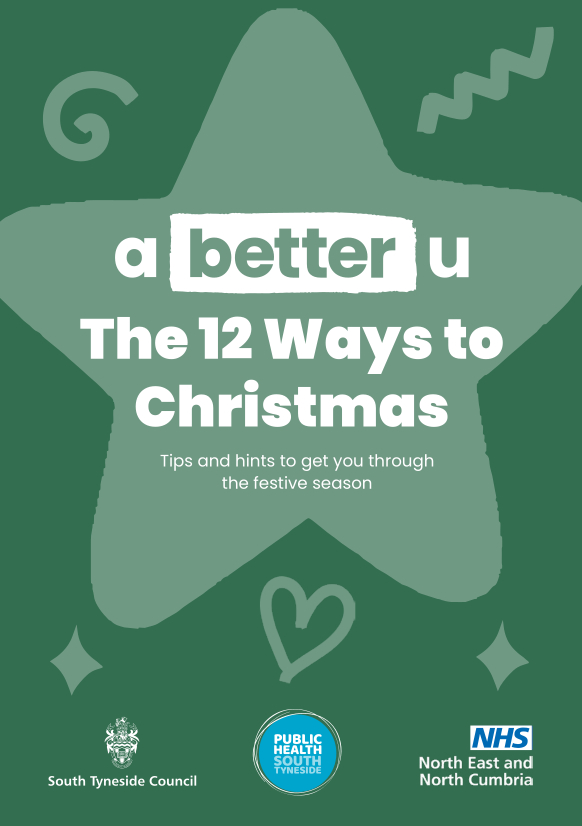 The 12 Ways to Christmas Booklet offers advice on:
You can request a physical copy of the booklet by emailing public.health@southtyneside.gov.uk or download an electronic version here: 12 Ways to Christmas 2023.
Latest news
21.04.2026
Help others understand health advice and receive a £25 voucher
20.04.2026
Tell us about your experience of hospital discharge
16.04.2026
Athletics legend Steve Cram inspires NHS staff to get active

08.04.2026
Bereaved families invited to take part in new research study

08.04.2026
New mental health support service for LGBTQ+ young people aged 11–25

07.04.2026
Young people waiting up to two years for mental health support
Quick online NHS services

Have your say
Let us know about your recent experience of health and social care services.
Let us know