

21.04.2026
Help others understand health advice and receive a £25 voucher
As a result, nearly 20,000 cancers (19,291) were detected – nine cases in every 1,000 women screened – which is up almost 16% on the previous year, when 16,677 cancers were diagnosed through NHS breast screening.
This means thousands more women were able to access treatment earlier, when there are more options available and treatment is more likely to be effective.
Encouragingly, attendance among women invited for screening for the first time reached 63.6% – the highest level in a decade – with 4.79 million eligible women now up to date with their breast screening – also a ten-year high.
Overall, around 71.8% of eligible women are now up to date with screening under the programme’s three-year standard, up 1.8 percentage points on last year.
Despite this progress, the latest statistics from the NHS Breast Screening Programme show that around three in ten women did not take up the offer of screening.
Local screening services are working with NHS England to improve uptake, including targeted outreach in lower-attending areas, reminder texts and expanded use of mobile screening units to bring services closer to home.
The NHS also launched its first-ever national breast screening campaign in February last year to support even more women to come forward.
Backed by charities including Breast Cancer Now, the campaign featured public figures including Victoria Derbyshire, Julia Bradbury and Shirley Ballas who all shared personal messages to encourage women to attend.
During the campaign period, the NHS saw a huge increase in people accessing information online, with tens of thousands of women visiting NHS breast screening pages in a single week and clicks to the screening service finder rising sharply.

Dr Harrison Carter, Director of Screening at NHS England, said: “Breast screening can save lives. With nearly 20,000 cancers detected early through screening last year, it’s encouraging to see more women attending, especially those invited for the first time, because making screening a habit can help protect your health for years to come.
“But we know there are a range of reasons why some women don’t come forward and there is much more still to do to support more women to access breast screening. If you receive an invitation, please don’t ignore it. It’s an appointment that could save your life.”
Philomena, whose breast cancer was detected through routine screening, said she nearly ignored her invitation before deciding to attend: “Encouraging women to attend their breast screening appointment is something that I am extremely passionate about, as I know how much it matters. I’ve lost friends who might still be here if their cancer had been found earlier, and I very nearly ignored my own screening invitation, too. At the time, I didn’t want to disrupt a new job I loved, but that small delay could have cost me everything.
“When I finally went for my mammogram, it led to the early detection of stage 2 breast cancer. Hearing those words was devastating, but catching it early meant I had a fighting chance. Treatment was challenging, but it gave me my life back, and it strengthened my commitment to raising awareness about the importance of breast screening in my community.
“Screening is quick, free, and could be the difference between catching cancer early or too late. Please make the time for your appointment. Prioritising your health isn’t selfish – it’s essential. My screening saved my life, and it could save yours too.”
Women aged 50 up to the age of 71 are invited for breast screening every three years, with appointments provided locally through clinics and mobile units.
Breast screening does have some risks. Some women who have screening will be diagnosed and treated for slow-growing breast cancers that may never otherwise have been found or caused them harm. Mammograms also do not always find a cancer that is there, but most people feel the benefits of breast screening outweigh the possible risks.
Read more about NHS plans for breast screening.
Feedback through community engagement and signposting and information work has highlighted two key areas of concern for those seeking mental health support – the length of time they need to wait to start receiving mental health support and what they can do while they are waiting.
The adult mental health project will include the hosting of focus groups to clearly understand the issues and needs of service users, a review of the accessibility pathways for who are not confident using technology and an awareness campaign highlighting patients’ rights when accessing mental health support.
Healthwatch will also develop recommendations and collaborate with the local authority commissioning team to improve the experience of adult mental health support.
The second project looking at hospital discharge follows local engagement which has highlighted public concerns including the lack of care plans put in place when needed and a lack of communication with family members.
It will include an online and paper survey to gather feedback from those who have experienced the hospital discharge process, focus groups and visits to hospital wards to speak with patients, family members and carers. Staff will also attend the Discharge Lounge at South Tyneside District Hospital to gather feedback around the discharge process.
These will be the final key priorities for Healthwatch South Tyneside as it enters its last full year of operation.
Last July the Government announced that as part of the NHS Ten Year Plan it would be transferring the work of Healthwatch England to the Department of Health and Social Care and the work of local Healthwatch services to the NHS and local authorities.
The changes will be included in the Health Reform Bill which is anticipated to be introduced to Parliament in early 2026 and enacted in early 2027.
At this stage it is believed that Healthwatch will continue until the end of the 2026/7 financial year until new arrangements are in place to replace its various functions. Funding for Healthwatch from the Department of Health and Social Care for the full year was confirmed in a local government bulletin issued last month.
Healthwatch South Tyneside was launched along with local Healthwatches across the country in 2013 to make sure NHS leaders and other decision-makers hear the care experiences of people in England and use their feedback to improve support.
A full copy of the Operational Plan can be downloaded here.
With the main structure now complete, work is advancing inside the building. Installation of the central staircase is underway, marking the start of an exciting new phase as internal spaces begin to take shape.
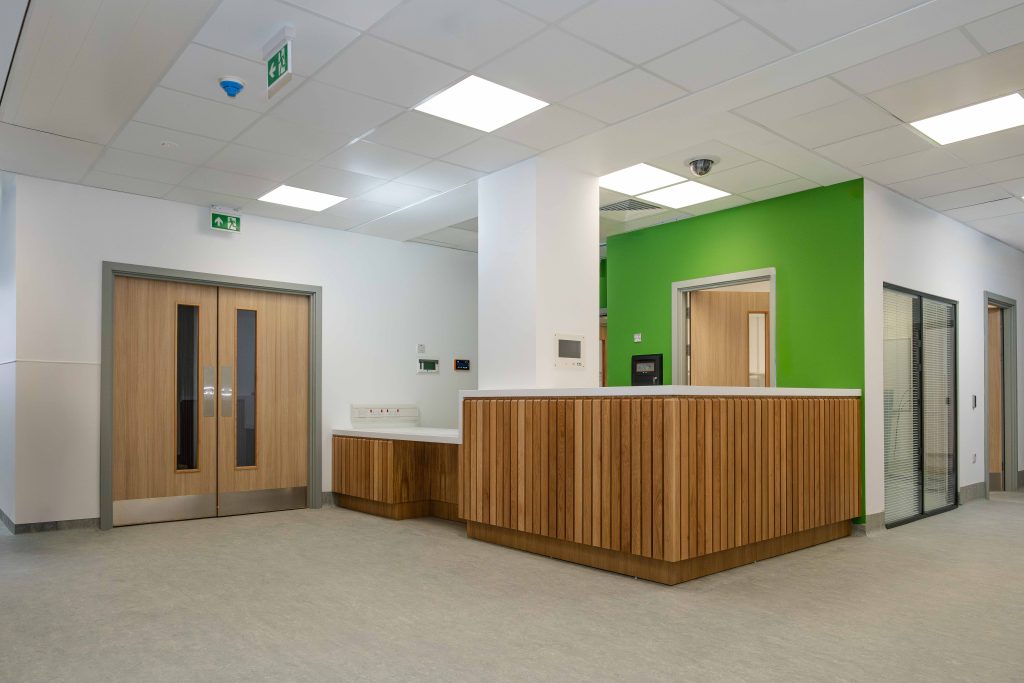
The new Emergency Department on the ground floor has been fully decorated, featuring forest green walls designed to create a welcoming and calming environment for patients.
The department will also include a dedicated children’s waiting area, offering a more comfortable and reassuring space for younger patients and their families.
As a centre of excellence for ophthalmology, the new hospital has been designed to lead the way in creating accessible spaces that can be easily used and confidently navigated by everyone, including those with visual impairments.
The colour scheme was developed by architects working closely with the clinical design team and the Royal National Institute of Blind People (RNIB), drawing inspiration from the changing seasons in the nearby Galleys Gill parkland.
To support navigation, colours and large signage will be placed across the building. Each level has a dominant colour which is reinforced at key waiting areas and around the lifts.
These include a calming forest green on the ground floor, vibrant lime green on the first floor, uplifting yellow on the second floor and bold orange on the third.
Externally, work is underway on the new car parking area, which will provide 90 parking bays for patients and visitors including seven accessible spaces.
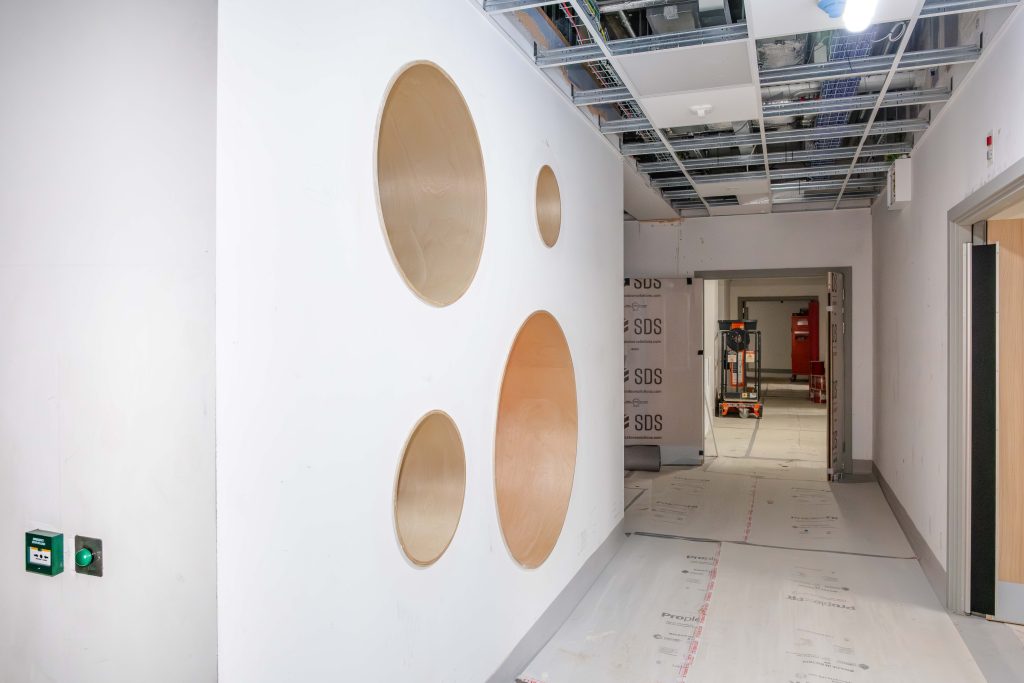 Over the next month, further developments will take place including the installation of the cycle shelter, tarmacking of roads and parking bays, paving in the external area and final decoration on the upper floors.
Constructed by Kier Construction, the project is a collaboration between South Tyneside and Sunderland NHS Foundation Trust and Sunderland City Council.
Ken Bremner MBE, Chief Executive of South Tyneside and Sunderland NHS Foundation Trust, said: “It’s fantastic to see the new hospital coming to life and we’re excited to welcome patients into a more comfortable and accessible environment. This new facility is a major step forward for our services and reflects the exceptional care our teams deliver every day.
“It’s a testament to the strength of our partnerships and our shared commitment to delivering exceptional care for our communities.”
Councillor Kevin Johnston, cabinet member for housing, regeneration and business at Sunderland City Council, said: “It’s fantastic to see such rapid progress at the Eye Hospital, as the building closes in on completion. Looking around the building, you get a real sense of how this world-class hospital will feel when it is alive with patients, families and staff when it opens in the summer.”
The project, which broke ground in December 2023, represents a major step forward in strengthening specialist care for the region.
Once open, it will house all the current clinical services offered from Queen Alexandra Road site and form a key part of the Sunderland Riverside regeneration scheme.
Alongside the build, STS Charity, which is run by the Trust, is leading the Vision Appeal. This aims to raise funds to improve patient care and invest in enhanced equipment above and beyond what the NHS can fund.
To stay up to date with the Riverside Sunderland development, visit: www.riversidesunderland.co.uk
For more information or to donate to the Vision Appeal visit this page: Vision Appeal
The new data shows there were 1.43 million treatments delivered in December – an increase of 91,775 on last year – despite 5 days of industrial action by resident doctors, thanks to staff maintaining almost 95% of usual activity during strikes.
The percentage of people waiting over 18 weeks for treatment slightly decreased to 61.5%, while the percentage of those waiting over 52 weeks dropped to just 1.9% – the lowest since June 2020 – as the Elective Reform Plan continues to drive NHS services to tackle the longest waits and ensure more people are seen quicker.
The progress comes thanks to the Elective Reform Plan, which has led to an expansion of community diagnostic centres and surgical hubs, creating more evening and weekend clinics, as well as sending patients ‘straight to test’ rather than multiple clinic visits.
While NHS staff used innovative measures across the country including high-intensity theatre (HIT) lists across elective surgery hubs to maximise the number of patients treated in one day or using robotic-assisted surgeries to speed up procedures and increase precision – getting more patients home sooner and recovering faster.
The data also shows demand across emergency services is showing no signs of letting up, with the NHS on track for its busiest winter ever.
A&E staff experienced a record high January of 2,320,266 A&E attendances – 4.6% higher than in January 2025 – while ambulance staff have faced a record number of incidents across December and January.
Despite this, staff continue to manage the ever-increasing demand, with 206,800 more people admitted, transferred or discharged in less than 4 hours in Type 1 A&E departments across winter so far this year when compared to last year (3.4 million in October 2025 to January 2026 vs 3.2 million in October 2024 to January 2025).
Four-hour NHS performance has been at 73.5% across winter so far – up from 72.1% last year and less than 70% the year before.
Ambulance response times are quicker than last winter, with both Category 1 and Category 2 response times down on last year (C1 8:08 and C2 35:04 in January 2026 vs C1 8:16 and C2 35:39 in January 2025).
Separate figures also just published show hospitals are continuing to face the impact of seasonal viruses, with an average of 1,119 patients in hospital with flu and 929 with norovirus each day last week.
The government launched the National Cancer Plan earlier this month, committing the NHS to meet all cancer waiting time standards by 2029, with hundreds of thousands more patients treated within 62 days.
Staff carried out 2.37 million tests and checks in December alongside 77.4% of people receiving the all-clear or a cancer diagnosis within 4 weeks of an urgent suspected cancer referral – the highest proportion in 9 months (76.7% in April 2025).
Duncan Burton, Chief Nursing Officer for England, said: “Completing a historic high of elective activity is a triumph for NHS staff who continue to innovate and go above and beyond to treat more patients, faster.
“Thanks to early preparations and careful planning, ambulance waits are shorter and A&E treatment times are faster this winter – even as staff face record demand – while we know there is further to go in improving patient flow and cutting the longest emergency department waits.”
“We saw a great response from the public with many people getting protected against winter viruses this year, which is paying off for patients and keeping more people well and at home.
“With a particularly wet start to the year and cold weather alerts issued for England over the weekend, as ever, it’s really important the public continue to come forward for care in the usual way – by dialling 999 in an emergency and otherwise using 111 online, your local pharmacist or GP”.
Health and Social Care Secretary, Wes Streeting said: “Despite having to deal with flu and industrial action, the NHS has managed to continue cutting waiting lists, thanks to a Herculean effort this winter.
“This government has cut waiting lists by more than 330,000, with hundreds of thousands more people treated within 18 weeks. That’s not happening by chance – it’s because we delivered record levels of care in 2025.
“This progress is driven by unprecedented investment and modernisation of our health service, and above all by the dedication of NHS staff.
“Whether it’s by opening up new community diagnostic centres, rolling out surgical hubs to tackle backlogs, or investing in modern equipment and technology, we are rebuilding our NHS.
“There’s so much more to do, but people can take hope and optimism from the fact that the NHS is finally on the road to recovery.”
Source: https://www.england.nhs.uk/2026/02/waiting-list-lowest-3-years-battled-busiest-winter-on-record/
The collaboratives are networks of people with lived experience of cancer – patients, carers and family members – who want to have their say in how NHS cancer services are shaped.
Members work alongside NHS Trusts, the Northern Cancer Alliance and Public Health teams to look at every stage of the cancer pathway, including screening and prevention, treatment and aftercare.
Why is this important?
The insight service users hold is invaluable. Their experiences help highlight what is working well and where improvements are needed. Every six weeks, NCV hosts a one‑hour online call where collaborative members:
It’s also a gentle introduction for anyone interested in getting involved in patient voice or service development work.
Two collaboratives are available:
Anyone who would like to join or find out more can email info@northerncancervoices.co.uk or visit https://northerncancervoices.co.uk.
Before her eventual diagnosis, the Airbus engineer from Stevenage had contacted her GP on more than 20 occasions after feeling unwell, but was told her symptoms were related to long Covid and that she was “too young for cancer”.
Her family then arranged a private appointment and she was referred to a specialist, who gave Jess a terminal cancer diagnosis of adenocarcinoma – cancer of the glands that line the organs – in November. She died three weeks later, just days before Christmas 2020.
Under Jess’s Rule, GPs are asked to take a “fresh eyes” approach if they have been unable to offer a patient a substantiated diagnosis or their symptoms have escalated after three appointments.
 It has a ‘three strikes and we rethink’ approach:
Reflect: Think back on what the patient has said and consider what has changed or been missed. Offer ongoing continuity of care with follow-up. If previous consultations have been remote, see the patient face-to-face and conduct a physical examination.
Review: Where underlying uncertainty exists, consider seeking a view from a peer and review any red flags that may suggest another diagnosis, regardless of the patient’s age or demographic.
Rethink: If appropriate, refer onwards for further tests or for specialist input
The government said the consultation room posters would improve patient safety by prompting doctors to “revisit patient records, challenge initial assumptions and remain alert to warning signs that might otherwise be missed”.
Health Secretary Wes Streeting said: “Every patient deserves to be heard, and every serious illness deserves to be caught early.
“Jess’s Rule makes that possible – reminding clinicians to take a fresh look when symptoms persist, and empowering patients to speak up about their care.”
The posters were designed by Jess’s parents Andrea and Simon in partnership with NHS England and the Department of Health, and funded by the Jessica Brady Cedar Trust established in her honour.
Dr Claire Fuller, NHS England’s national medical director, said: “Encouraging GP teams to challenge a diagnosis when it matters most could save lives by avoiding missed or late diagnoses.”
Latest news
21.04.2026
Help others understand health advice and receive a £25 voucher

20.04.2026
Tell us about your experience of hospital discharge
16.04.2026
Athletics legend Steve Cram inspires NHS staff to get active

08.04.2026
Bereaved families invited to take part in new research study

08.04.2026
New mental health support service for LGBTQ+ young people aged 11–25

07.04.2026
Young people waiting up to two years for mental health support
Quick online NHS services

Have your say
Let us know about your recent experience of health and social care services.
Let us know