

21.04.2026
Help others understand health advice and receive a £25 voucher
Around half a dozen staff from South Tyneside and Sunderland NHS Foundation Trust will be taking part in the AJ Bell Great North Run to boost the funds of its STS Charity and its recently launched Vision Appeal.
Money raised will be used to buy equipment, improve facilities and makes sure patients have access to things which make their care better.
It will also support the development of the Trust’s new eye hospital in Sunderland. Construction is now underway and expected to take two years.
This year’s Great North Run will take place on Sunday, September 8.
Among the runners taking part to support the STS Charity will be Bunmi Ojuri, a specialist Musculoskeletal Physiotherapist who works in its Occupational Health and Wellbeing Team.
She said: “I’ll be running it for the very first time. I signed up because it’s my first year working with the Trust and I feel it would be a great way to give back.
“I’m looking forward to it and quite excited.”
Her fundraising page can be found here.
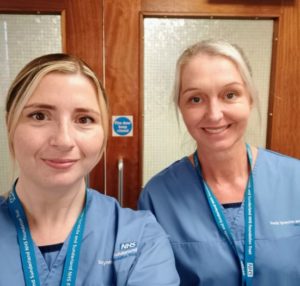 Julie Conlon, an Advanced Clinical Physiologist and Amanda Dowson, a Specialist Clinical Physiologist, both work in Neurophysiology at Sunderland Royal Hospital will be taking part for the Red Sky Foundation.
Mam-of-three Julie said: “It is only my second GNR, last year was my first. I feel it is a fantastic event and a great way of raising money for charities across the North East. The training is difficult, but it does keep you fit. I have a condition called Polycystic Kidney Disease which effects the size of my kidneys, their function and causes high blood pressure. Running helps keep my blood pressure down.”
Her funding page can be found via this page.
Amanda added: “This will be my fourth GNR however my previous races were over six years ago so it’s all new again. Training has been hard, but I’ll be proud to get to the finish line.”
Amanda’s funding page can be found through this link.
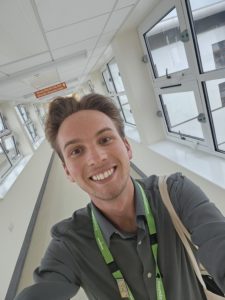 James Hardy is a Foundation Year 1 doctor who has just begun the next stage of his career with the Trust. He is based at Sunderland Royal Hospital and is working on D46, a ward which supports patients who have had a stroke.
He is running for the Albert Kennedy Trust, which is known as akt. The charity supports LGBTQ+ young people aged 16 to 25 who are facing or experiencing homelessness.
He said: “AKT is important because 24% of homeless young people identify as LGBTQ+ and 77% believe that coming out to their parents was the main factor. I know that a single pound can change a life. I feel so incredibly lucky to have such supportive family and friends, thanks for being there for me. For now, I’m looking forward to race day.”
James can be sponsored through this fundraising page.
The course will take the tens of thousands of runners on a half marathon course which passes the gates of South Tyneside District Hospital.
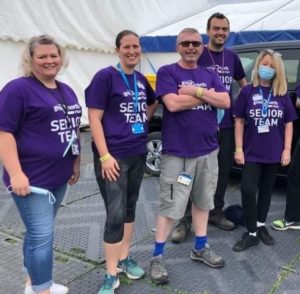 Additional staff will be on hand in its A&E for any runners who become unwell or injured on its section of the event.
Meanwhile, a team of volunteer workers from the Trust will help man the field hospital close to the finishing line on the South Shields seafront.
Visiting will be suspended at South Tyneside District Hospital on the afternoon due to the road closures. This means the John Reid Road entrance will be closed off to traffic, although vehicles can still get on and off site via Harton Lane.
The full details of the road closures can be found here.
STS Charity plays a vital role in helping to improve the experience of those who use and visit hospitals and community services in South Tyneside and Sunderland. The charity helps to fund improvements that wouldn’t normally be provided through NHS funding.
You can get a free flu vaccine from September 1 if you are:
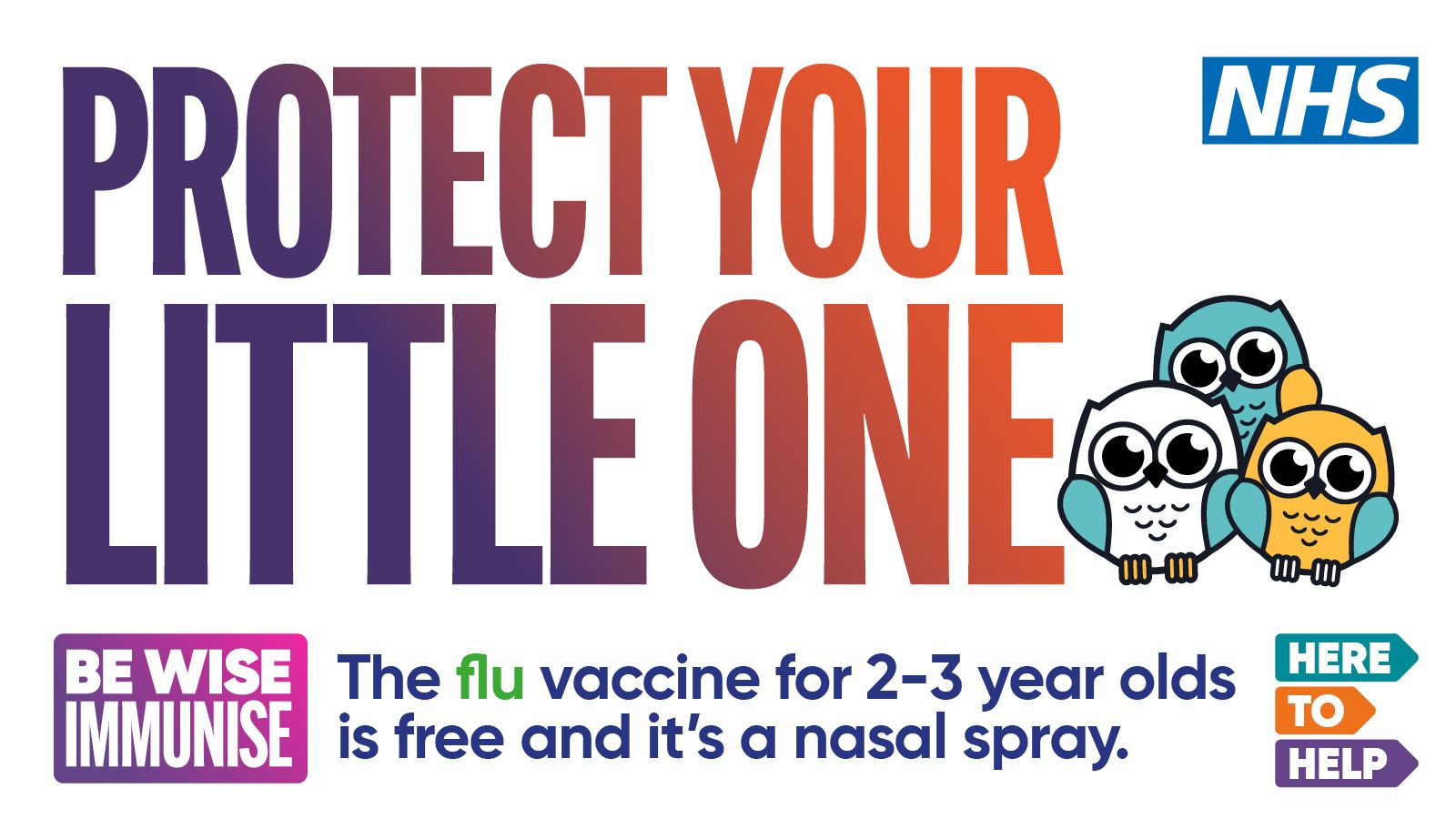
Free flu vaccinations will be available from October 3 for:
Find out how to book your vaccination at:
https://www.nhs.uk/conditions/flu/
#BeWiseImmunise
People aged between 55 and 74 who have smoked have a higher risk of developing lung cancer and will be invited to attend a Targeted Lung Health check.
This is done in two parts. First you will have a phone call or meeting with a health professional who will ask you about your health and look at your risk of developing lung cancer.
If you are at higher risk you will be invited for a lung scan which takes a detailed picture of your lungs and will be looked at by experts. If they find any problems you will be asked to come back for more treatment.
It can be hard to spot lung cancer. There are often no signs of symptoms at an early stage. Around seven in ten cancer patients are diagnosed too late. This means there is less chance that treatment will make them better.
Targeted Lung Health Checks help find problems earlier. You might not even know there is anything wrong. It helps save lives. This is because treatment can start sooner. It is also more likely to work. Most lung cancers grow slowly. This means they can be found at an early stage by a lung scan.
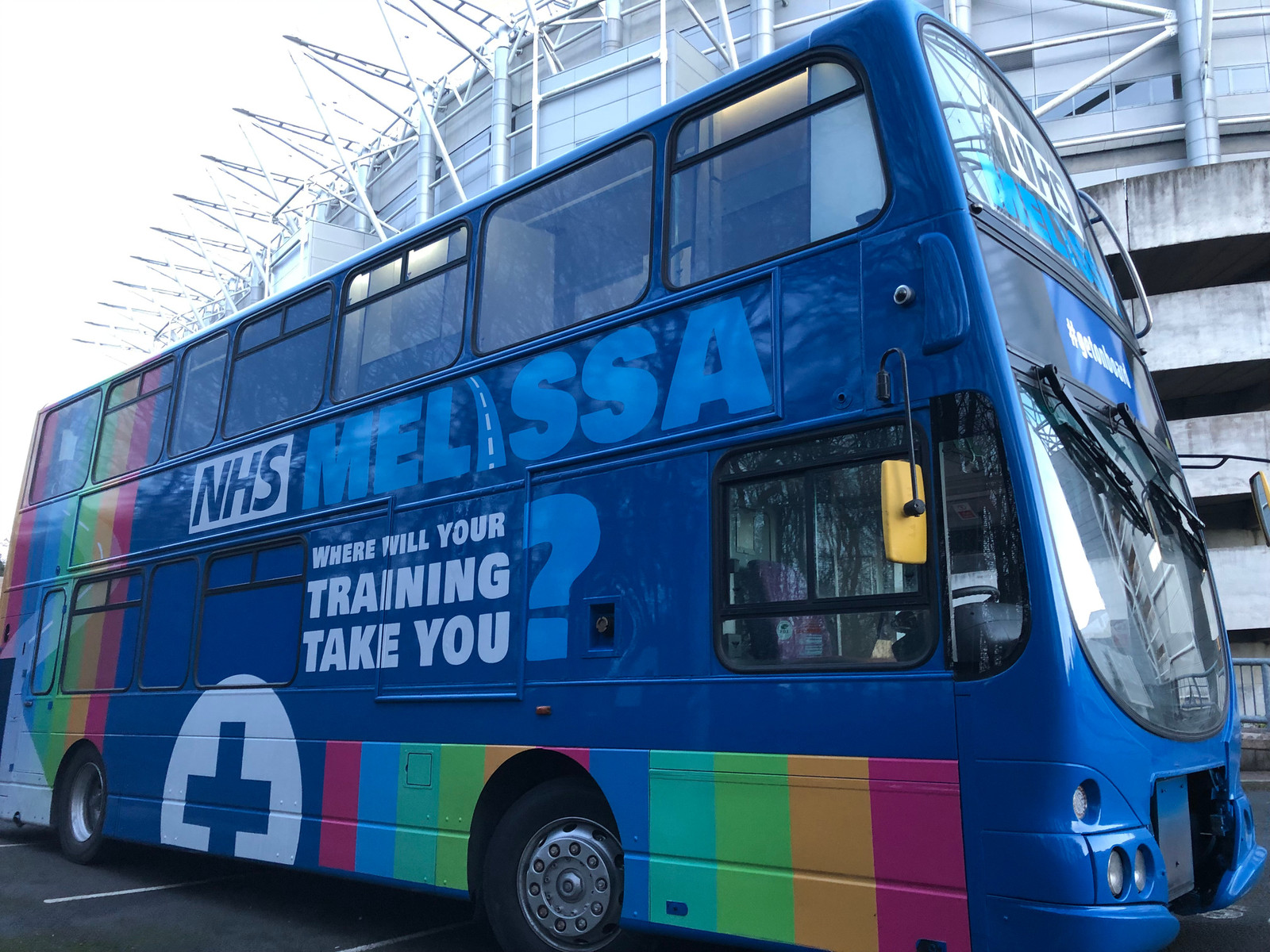
The MELISSA training bus will be parked in the following locations and dates to raise awareness of lung cancer and promotion of screening:
On Wednesday October 9 from 10am to 2pm members of the lung cancer screening team will also be in the foyer at ASDA Boldon.
The events are being supported by the Roy Castle Lung Foundation, which has worked tirelessly to raise awareness of lung cancer and promotion of screening.
More information on the lung cancer screening programme can be found on the attached leaflet you can download here and you can also watch the film here:
People of all ages, including children, who are in crisis or concerned family and loved ones can now call 111, select the mental health option and speak to a trained mental health professional.
NHS staff can guide callers with next steps such organising face-to-face community support or facilitating access to alternatives services, such as crisis cafés or safe havens which provide a place for people to stay as an alternative to A&E or a hospital admission.
Previously, local health systems had their own separate phone lines, which were fast-tracked during the pandemic and took around 200,000 calls per month.
For people who need support at A&E, if there is a risk to life, every emergency department in England now also has a liaison psychiatric team available to offer specialist care.
NHS Talking Therapy Services are also available for people who need help with other mental conditions such as anxiety, depression, obsessive compulsive disorder and PTSD and anyone can refer themselves online via NHS.uk or by contacting their GP.
The NHS continues to advise people to call 999 if there is a serious risk to life.

NHS National Director for Mental Health, Claire Murdoch, said: “We know that record numbers of people are suffering with their mental health, and we want to ensure that when people are in crisis, they have easy, straightforward access to the support they need.
“While the NHS made significant progress during the pandemic with local services creating their own crisis phone lines, we want to go a step further by giving people everywhere in England one single point of access via NHS 111.
“And in doing so, I am extremely proud that we will become one of the first countries in the world to offer a free universal package of support to people through one easy to access phone line.
“The new integrated service can give people of all ages specialist mental health support and ensure they can be offered face-to-face support in a safe and therapeutic environment.
“So, if you or someone you know needs urgent mental health support, please call 111, and select the mental health option.”
Minister of State for Care, Stephen Kinnock, said: “As part of our plans to help fix the broken health system we want to ensure we give mental health the same attention and focus as physical health.
“For the first time, there is one number you can call whether you are feeling physically unwell or worried about your mental health to access the support you might need.
“Separately, we are prioritising mental health by recruiting an additional 8,500 mental health workers to reduce delays and provide faster treatment alongside reforming the Mental Health Act.”
Rethink Mental Illness Chief Executive, Mark Winstanley, said: “A mental health crisis is traumatic and disorientating, and getting help as quickly as possible is vital. The last thing people need when they or a loved one is in crisis, is uncertainty about where to turn.
“Today, the NHS have made it easier to access urgent support via 111, building on provision already in place through crisis lines. We welcome this important step, and hope it will make it simpler for people to access the help they need.”
A full list of mental health support options is available via the NHS.uk website. The service is also suitable for deaf people, with tailored services available via the NHS 111 website.
Free listening services are also provided by charities such as The Samaritans or Shout Crisis text line.
The NHS has invested an extra £2.3 billion into expanding mental health services, and this latest innovation will help patients in crisis get directed to the support they need quickly.
The health service has met its ambition to expand community mental health treatment by 370,000 people per year for patients with severe mental illness.
Source: https://www.england.nhs.uk/2024/08/nhs-111-offering-crisis-mental-health-support-for-the-first-time/
Between January and April, 1,250 patients aged 16 or over at each participating NHS trust were invited to take part in the survey and 63,573 people across 131 NHS trusts responded – including 512 patients at South Tyneside and Sunderland NHS Foundation Trust (STSFT).
All scored a number of areas relating to their stay out of ten. The scores for STSFT were as follows:
All were in line with the national scores.
The overall results showed that people’s experiences of inpatient care have deteriorated since 2020. The results for the 2023 survey remain generally consistent with 2022 and 2021 following significant declines for almost all questions in the 2021 survey compared with 2020.
Most respondents reported a positive experience in their interactions with doctors and nurses, such as being treated with respect, dignity, kindness and compassion and being included in conversations, generally remaining consistent with the previous year, although those receiving clear answers to questions and having confidence and trust has decreased slightly.
Discharge from hospital remains a challenging part of people’s experiences of care. Fewer respondents felt involved in decisions about their discharge from hospital, with less than half feeling they were given enough notice before being discharged. Over four in ten felt certain about what would happen with their care after leaving hospital.
Experiences of hospital waiting times have continued to decline. While elective patients remain generally positive about their experience of how long they had to wait before being admitted to hospital, with most rating the quality of information they received while on the waiting list as good, more people felt that they had to wait too long. Although just under half of elective patients reported no change to their health while waiting for admission, just over four in ten felt their health worsened.
People who were considered frail reported poorer than average experiences for all the questions analysed in the survey.
Similarly, respondents aged 16 to 50, those admitted for emergency care, or those with a disability, dementia or Alzheimer’s, a condition which affects their physical mobility, or ‘another long-term health condition’ reported poorer experiences of inpatient care for almost all questions we explored.
Respondents with a neurological condition reported poorer experiences for more than half of these questions.
In contrast, older people, male respondents, people who were in hospital for an elective admission, those who stayed in hospital for only one night, and those not considered frail or disabled generally reported better experiences across most areas of care.
Louise Ansari, Chief Executive of Healthwatch England, responded to the CQC report. She said: “These findings reflect what people have told us about their experience of hospital discharge, with a lack of communication from services making them feel forgotten and confused about the next steps.
“Poor hospital discharge processes can leave people unable to get home or get the appropriate help once at home. It also leaves people at risk of returning to their GP, hospital or social care teams soon after discharge. And uncertainty about next steps can increase the pressure on unpaid carers who are left without support to help the person they care for.”
She added: “A rise in the number of patients who say their health deteriorated while awaiting hospital admission is troubling, especially given the NHS’s efforts to tackle waiting times.
“People tell us about the detrimental effect of delays, cancellations and long waits on their health and wellbeing. The NHS won’t reduce waiting times overnight, but more needs to be done to prioritise those in greatest need and improve the experience of waiting.
“Central to this is providing more regular check-ins about people’s condition and pain levels and better support for physical and mental health symptoms. We also want to see more regular publications of data on people’s experiences, and for the NHS teams to measure their performance against experience as well as total numbers of appointments.
“While most people report good care from staff once they get to hospital, patients need more support while they wait.”
The full report can be found here and the findings for STSFT here.
The Asda pharmacy at the stores in North Road, Boldon Colliery, NE35 9AR, and Coronation Street, South Shields, NE33 1AZ, will both be open from 10am to 4pm.
Should you be out of the borough on the day and require pharmacy services, a full list for the region can be found here.
Latest news
21.04.2026
Help others understand health advice and receive a £25 voucher

20.04.2026
Tell us about your experience of hospital discharge
16.04.2026
Athletics legend Steve Cram inspires NHS staff to get active

08.04.2026
Bereaved families invited to take part in new research study

08.04.2026
New mental health support service for LGBTQ+ young people aged 11–25

07.04.2026
Young people waiting up to two years for mental health support
Quick online NHS services

Have your say
Let us know about your recent experience of health and social care services.
Let us know