
23.07.2026
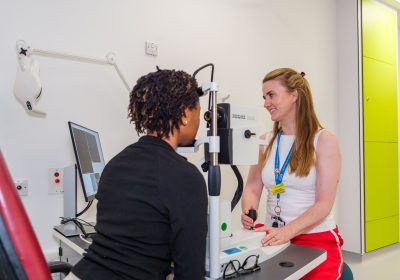
NHS staff celebrate ‘incredibly exciting’ new home as Sunderland Specialist Eye Hospital fully opens
In addition to measles, mumps and rubella (MMR/V), the vaccine will also include protection against chickenpox (Varicella).
Parents of children aged under six will be contacted by their local GP; while families with children aged between six and 11 will be invited by the NHS App, SMS, email or letter.
Figures published by the UK Health Security Agency (UKHSA) show there were over 800 cases of measles in the first half of 2026 and two reported deaths, compared to 959 cases for the whole of 2025. There have been clusters of measles cases reported in areas of the country, with every region of England seeing cases.
Figures also show a gap of 7.5% in vaccine coverage between the least and the most deprived areas of the country.
The vaccination rate for both MMR doses at age five years in England is 84.1% (Jan – March 2026), lower than the 95% target set by the World Health Organization (WHO) and in January this year the WHO confirmed that the UK had lost its measles elimination status.
NHS Director of Vaccination Caroline Temmink said: “Measles can be devastating for families, with sometimes tragic consequences, which is why we’re reaching out to parents to help them protect their children.
“These childhood illnesses are serious and some of them in rare cases can be fatal, but they are entirely preventable.
“This is why GPs based in the communities they know so well are contacting families to help overcome any barriers to getting children the protection they need.
“If you are invited to catch up on your child’s vaccinations, please come forward and take up this crucial offer.”
Public Health Minister Sharon Hodgson said: “Vaccination is one of the most effective ways to protect children from serious diseases such as measles, mumps, rubella and chickenpox. These illnesses can be devastating, but they are preventable through routine childhood immunisation.
“If you’ve been contacted by the NHS to catch up on your child’s vaccinations, I encourage you to take up this offer as soon as possible. Making sure children are fully vaccinated means we can help keep them healthy, protect vulnerable people in our communities and prevent future outbreaks.”
Looking back to 2006, Facebook had only just opened to the public, YouTube was becoming the place to watch videos online, and Netflix was still posting DVDs through people’s letterboxes. Spotify didn’t exist, so if you wanted to listen to music, you were either buying a CD or convincing iTunes to take another 99p from your bank account.
Demand was already high for NEAS back then – managing around 362,000 emergency calls, 250,000 incidents attended, and over a million patient journeys that year.
It was reaching 76% of its most serious calls – then called category A calls – within the then target of eight minutes and had a total turnover of £73 million.
Since then, the ambulance service has grown from a transport-only model to one that has upskilled its clinical workforce to meet the changing needs of the population and NHS system. NEAS was also the first ambulance service to trial NHS Direct, which later became the NHS 111 service we know today.
Over the last year alone, the service answered more than 1.475m emergency 999 and NHS 111 calls, with more than 298,000 patients taken to hospital, more than 56,000 patients treated and discharged over the phone and more than 143,800 patients treated and discharged at home. It responded to more than 40,444 C1 serious and life-threatening incidents in an average time of 6 minutes 17 seconds.
Rather than being taken straight to the emergency department, more patients are now treated over the phone or in their own home and new pathways have been developed to provide better alternatives to A&E.
Andrew Hodge (pictured) joined what was then Northumbria Ambulance Service in March 1995. Having moved around the NHS in a variety of clinical roles, he returned to NEAS three years ago as the Trust’s first director of paramedicine, a new dedicated paramedic voice on the board to help guide the clinical direction of the service.
“When I look back at when I first qualified as a paramedic, for me it’s more of a reminder about what the paramedic could do compared to what we can do now,” he said.
“We were trained over six weeks to be an ambulance technician and a further 12 weeks to be a paramedic. We were focused on cannulation, intubation, life-saving drugs, cardiac arrest and trauma and I can remember taking every patient to hospital and not thinking once about why I’d taken them in. I think back now to some of the patients we took to hospital who would be fairly simple nowadays for the profession to think about managing in the community.
“Now we are much more broadly trained – yes for emergency care, but much more in the urgent care space – and are expected to be able to care for a broader range of clinical presentations.
“Whilst I can’t say what the ambulance service will look like in 20 years’ time, it will definitely need more diagnostics and innovations in technology and workforce to continue to meet the needs of the communities we serve.”
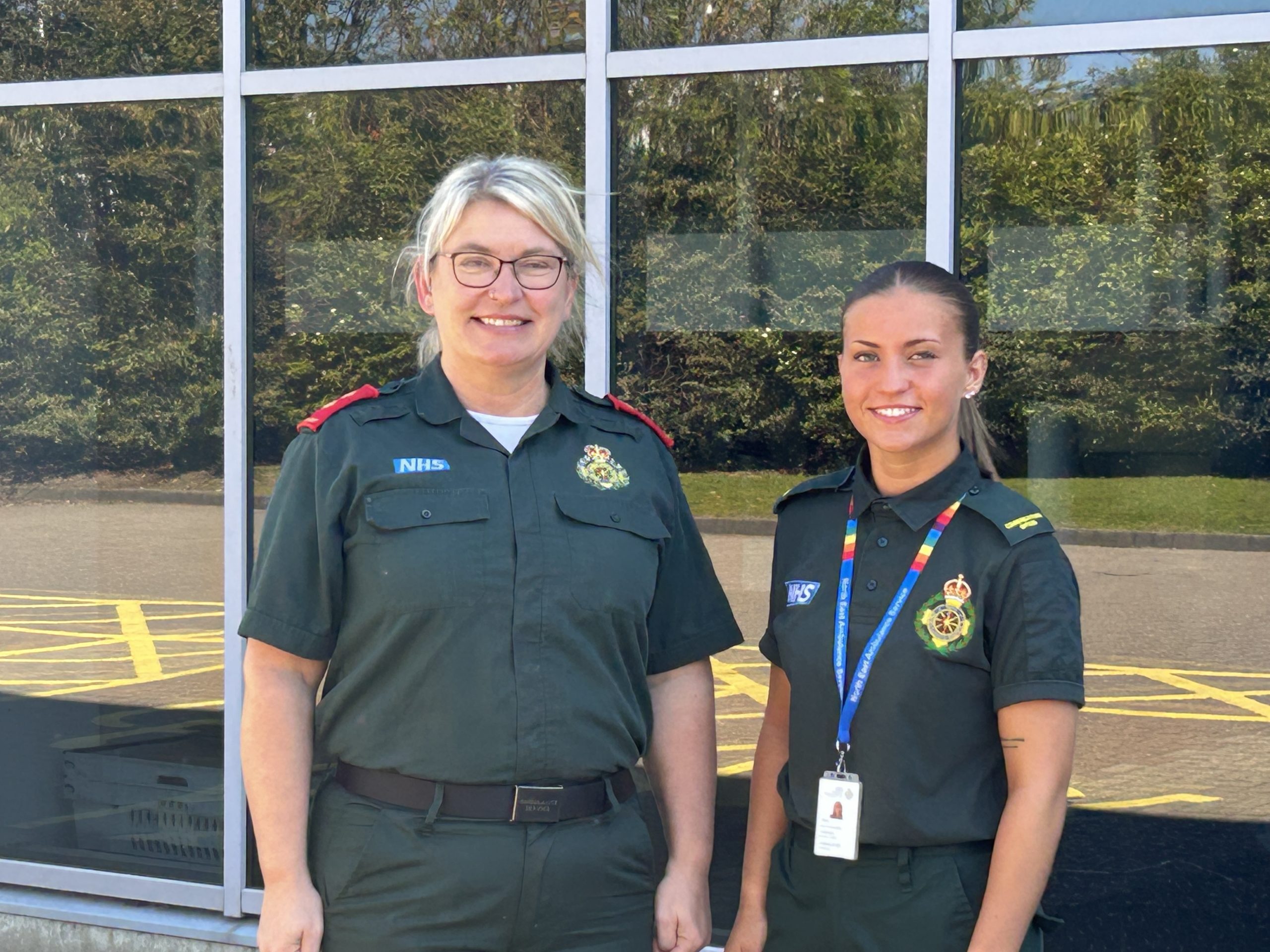
Sheila McLachlan has spent decades in the service, seeing it evolve into a profession focused on delivering the right care in the right place. Her daughter Amy Coatesworth joins a new generation, continuing a family connection to caring for others.
Sheila (pictured with Amy) said: “Every patient matters. Treat people how you’d want your own family to be treated.”
NEAS Chief Executive Kev Scollay said: “The progress that has been made in the last 20 years is staggering, particularly in regard to technology, equipment and the clinical skills of our workforce.
“The ambulance service has transformed into what was traditionally a ‘transport-only’ model into a multi-skilled organisation sitting at the heart of the NHS system, delivering highly skilled clinical care within the community and over the telephone.
“This anniversary provides us with a unique opportunity to take a pause and reflect on how far we have come over the last 20 years and, most importantly, to celebrate the people who make our service what it is, our amazing staff and volunteers.
“It also comes at a pivotal point for us in the year as we prepare to launch our new strategy, showing how our service aims to respond to the needs of our communities over the coming years.
“We have so much to be proud of as a service, and I look forward to seeing what the next 20 years hold for us.”
Our bumper annual report reflects this, with information about the varied research we have carried out on a wide range of health and care services.
Highlights from 2025-26 include:
But we couldn’t have done any of this without you. We’d like to thank everyone who has supported our work over the past year, including patients, relatives, staff and service commissioners.
Find out more about our year by downloading our annual report here.
Healthwatch was asked by the Adult Social Services Quality Team at South Tyneside Council to visit eight homes to give an independent view on how residents were treated and whether they felt they are living a good quality of life.
The Enter and View visits (Healthwatch has a legal power to visit health and social care services) were carried out between last October and February this year. Individual reports were written for each home which will be fed into their quality assurance process as well as a combined summary report for the Council.
The eight homes were: Belgrave Terrace; Dean View Villas; Fairholme; Harmony House; McAnany Avenue and Wallace Lodge/Wallace Mews in South Shields and Deneside Court and North View in Jarrow.
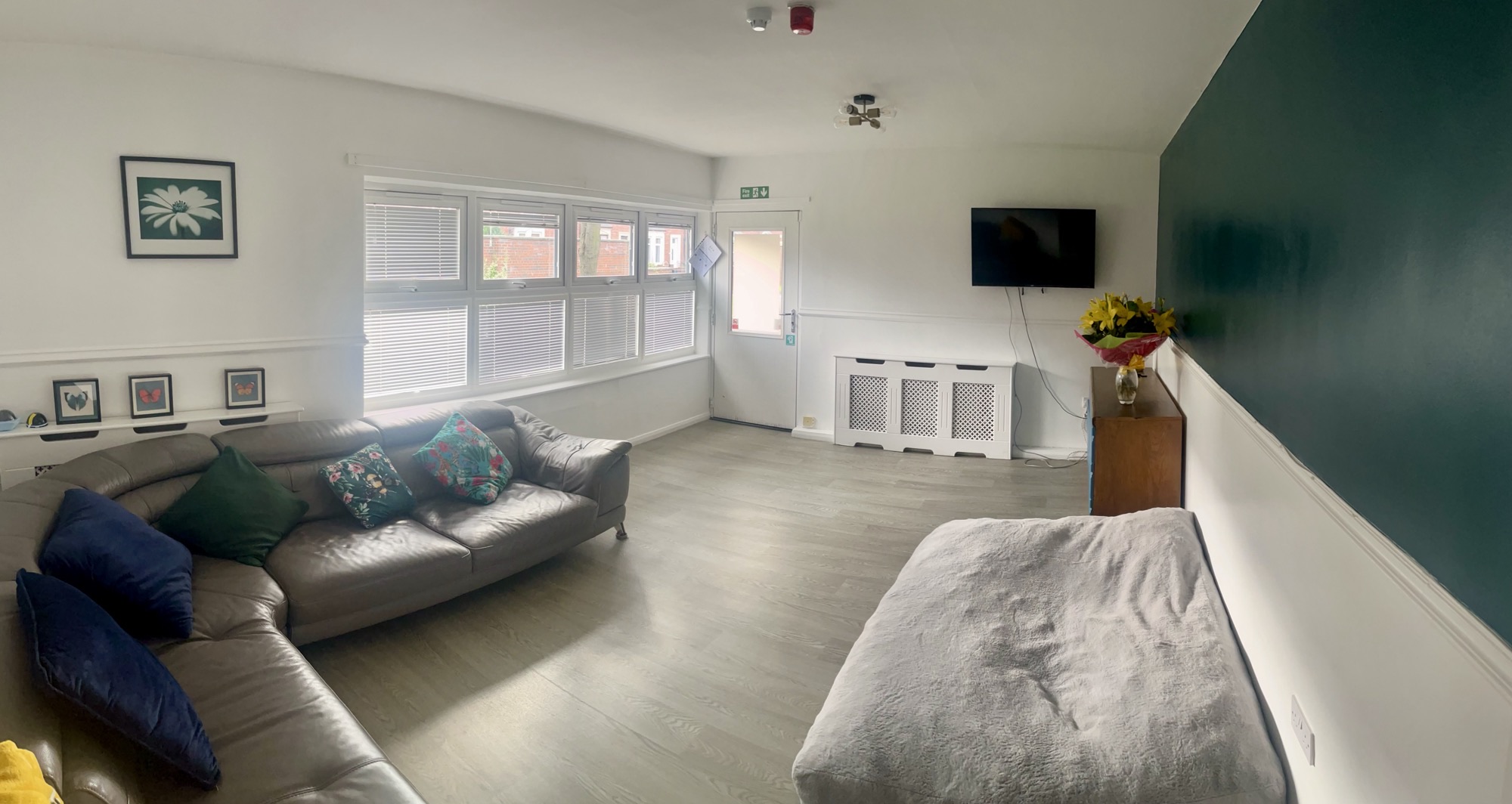
The living room at North View in Jarrow.
Healthwatch staff spoke to staff, residents and relatives/friends and 44 residents and seven relatives/friends took part in a survey.
The vast majority of residents and relatives/friends who spoke to our Enter and View team and/or completed the questionnaire were very happy with the care they received.
Staff we met clearly work hard and demonstrate a caring attitude towards the residents they support, who have a wide range of needs.
The efforts made to ensure the people in their care had as fulfilling a life as possible ranged from a holiday to Egypt to a chef described as a ‘lovely man’ who always tried to accommodate residents’ personal preferences at mealtimes.
We saw various examples of good practice which we felt could be shared with other specialist care homes in the borough – nice touches such as photos of current and past residents on display at North View and Wallace Mews taking residents out to hairdressers rather than having them come to the home.
In addition, we felt some homes achieved a particularly good rapport between staff and residents as detailed in the individual reports.
We did encounter one or two issues with pre-arranged visits where either key staff or residents were not available, which necessitated return visits.
Recommendations in individual reports include improved communication with residents, a little more warmth in the décor and ensuring where possible residents have a full understanding of their care plan.
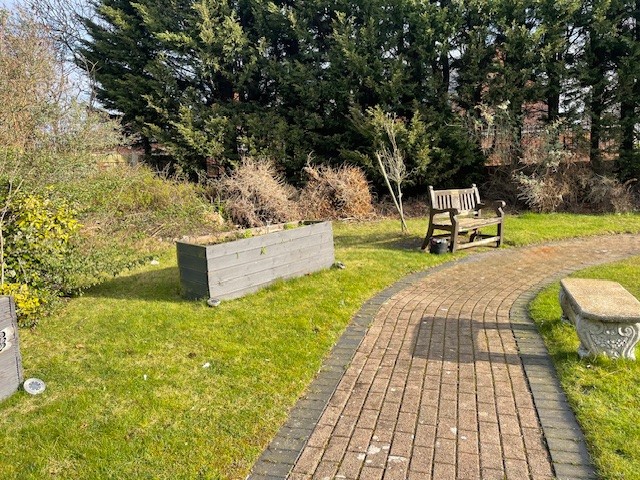
The garden at Harmony House
All care homes were invited to respond to their report and six out of the eight took up this opportunity for input.
Joy Kerr, Service Manager at Potensial properties Belgrave Terrace & Kensington Hall, said:
“We welcomed the visit by Healthwatch and your valuable insights. Having an independent view is always useful, and we really value the way Healthwatch helps bring residents’ voices to the front.”
Bernice Holohan, Registered Service Manager for St John of God facility North View, wrote:
“Your surveys and conversations will give us helpful insight into what’s going well and where we can keep improving. Having an independent view is always useful, and we really value the way Healthwatch helps bring residents’ voices to the front.”
Healthwatch received thanks from South Tyneside Council for the visits and detailed reports. Vicki Pattinson, Director of Adult Social Services and Commissioning, said:
“We greatly appreciate the significant work undertaken by Healthwatch South Tyneside in compiling this report and capturing the lived experiences of people receiving care.
“It is particularly heartening to see the positive feedback highlighted, which reflects the compassion, commitment, and high standards demonstrated by many of our providers and staff each day.
“These examples of good practice showcase the profound impact that high quality, person-centred care has on people’s lives.
“The report also brings to light important themes such as effective communication with residents, fostering welcoming and homely environments, and ensuring everyone has a clear understanding of their care and support plans.
“These aspects are fundamental to delivering consistent, high-quality care, and we are committed to working closely with providers and partners to strengthen these areas—enhancing communication, improving care environments, and ensuring every resident is fully involved in decisions about their care.
“We value the valuable insight this report provides, and it complements our own quality assurance processes in supporting ongoing improvement. We will continue to work in close partnership with Healthwatch, residents, carers and providers to ensure services remain safe, responsive and centred on what matters most to people.”
Read the full report at https://www.healthwatchsouthtyneside.co.uk/wp-content/uploads/2026/06/Its-My-Home-report-April-2026.pdf
Eligible students will need two doses of the MenB vaccine for protection, with the first being offered from late July and the second dose from August.
The one-off vaccination programme will be offered to:
Eligible people will need two doses for protection, with the first being offered from July and the second dose provided from August.
The Department of Health and Social Care (DHSC) has published a Q&A style blog to answer questions about the programme – see below.
The national booking system will go live on July 13 in England.
There were 12,990 visits to the hay fever page on nhs.uk from June 14 to 17, compared to 5,632 in the same period the week before, a rise of 131 per cent.
Duncan Burton, Chief Nursing Officer for England, said: “While I’m sure most people are delighted to be enjoying the warmth and sunshine at this time of year particularly during the World Cup, the warm weather does bring an increase in the pollen count that can cause discomfort for hay fever sufferers.
“Most people will be able to manage their symptoms with medication that is available off the shelf from community pharmacies and supermarkets, and the NHS website has more advice on how to deal with the discomfort.
“People should be careful not to double dose on medication which might make them drowsy particularly if planning to drive.”
There is currently no cure for hay fever, which usually hits between late March and September when the weather is warm, windy and humid, and the pollen count is at its highest.
The symptoms include sneezing, coughing, a runny or blocked nose, as well as red, itchy, or watery eyes. Sufferers can also experience headaches, earache or lose their sense of smell.
The NHS hay fever page details several ways people can ease their symptoms including staying indoors, keeping their windows shut, and coating their nostrils with Vaseline to trap the pollen.
The page also offers advice on different treatments available from pharmacists and recommends when people should seek help from their GP.
The NHS website, which is managed by NHS England, is the UK’s biggest health website.
DO
put petroleum jelly (such as Vaseline) around your nostrils to trap pollen
wear wraparound sunglasses, a mask or a wide-brimmed hat to stop pollen getting into your nose and eyes
shower and change your clothes after you have been outside to wash pollen off
keep windows and doors shut as much as possible
vacuum regularly and dust with a damp cloth
try to use a pollen filter in the air vents of your car, if you have one, and a HEPA filter in your vacuum cleaner
DON’T
do not cut grass or walk on grass
do not spend too much time outside
do not keep fresh flowers in the house
do not smoke or be around smoke – it makes your symptoms worse
do not dry clothes outside – they can catch pollen
do not let pets into the house if possible – they can carry pollen indoors
Speak to a pharmacist if you have hay fever. they can give you advice and suggest the best treatments to help with symptoms, such as:
Some antihistamines can make you very sleepy, so speak to your pharmacist about non-drowsy antihistamines if you need to.
Latest news
23.07.2026
NHS staff celebrate ‘incredibly exciting’ new home as Sunderland Specialist Eye Hospital fully opens
17.07.2026
Beyond the front desk: hearing from GP reception staff
14.07.2026
North East Ambulance Service urges public to stay safe this summer

08.07.2026
NHS warns ‘snooping’ staff face sack or prison for inappropriate access of patient data

07.07.2026
Volunteers to help people learn about kidney health sought

07.07.2026
New community hub for eye checks gets ready for kick off
Quick online NHS services

Have your say
Let us know about your recent experience of health and social care services.
Let us know