

21.04.2026
Help others understand health advice and receive a £25 voucher
So many of you have told us how concerned you are that there will no longer be a local, independent voice representing and supporting patients and people who draw on social care, their families and carers.
We want to reassure you that, even though the Healthwatch name will go, we are all committed to doing the very best we can for our communities and under-represented groups, now, and in the future.
The 10-year Health Plan acknowledges that “there needs to be a greater emphasis placed on the patient voice” but also, that “The problem is that the NHS doesn’t listen well enough”.
Healthwatch is described in the report by Dr Dash in the following terms: “Since 2013, Healthwatch has made a significant impact, aiding over a million people annually to voice their concerns and access advice.”
We are aware that a national petition has been created asking the government to:
The petition is here: Review decision to abolish independent local Healthwatch – Petitions
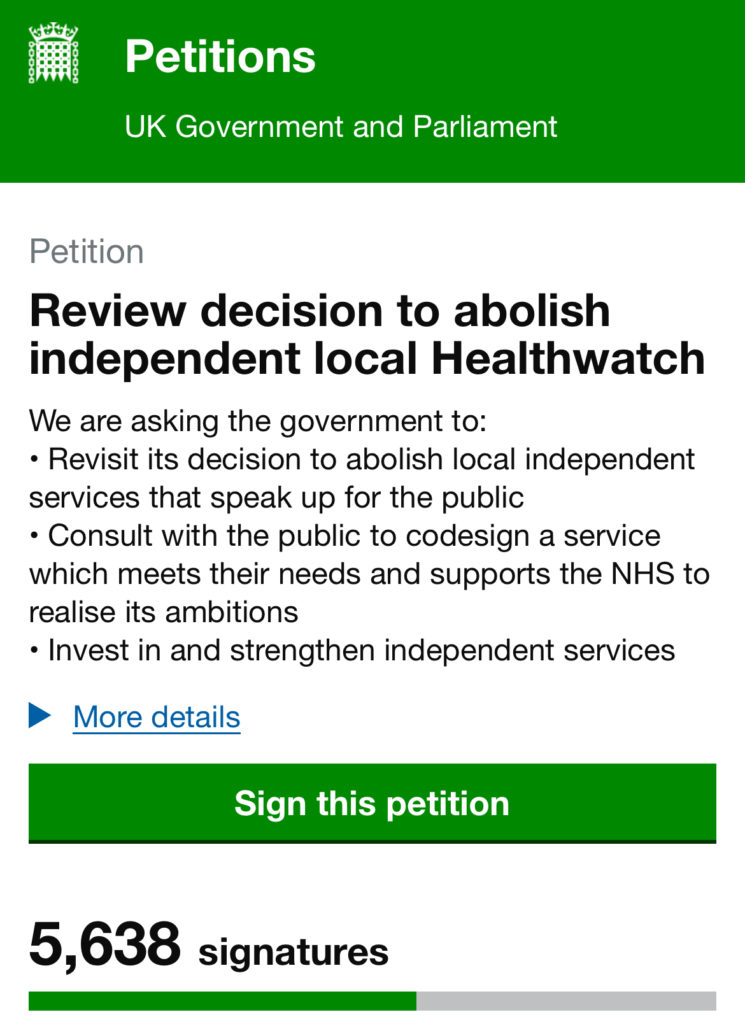
If this matters to you, please feel free to sign and share it.
People need to have a say in the future of health and care and we believe that voice must be independent.
Thank you again for supporting us. We’re grateful to have your support as we work through these changes together.
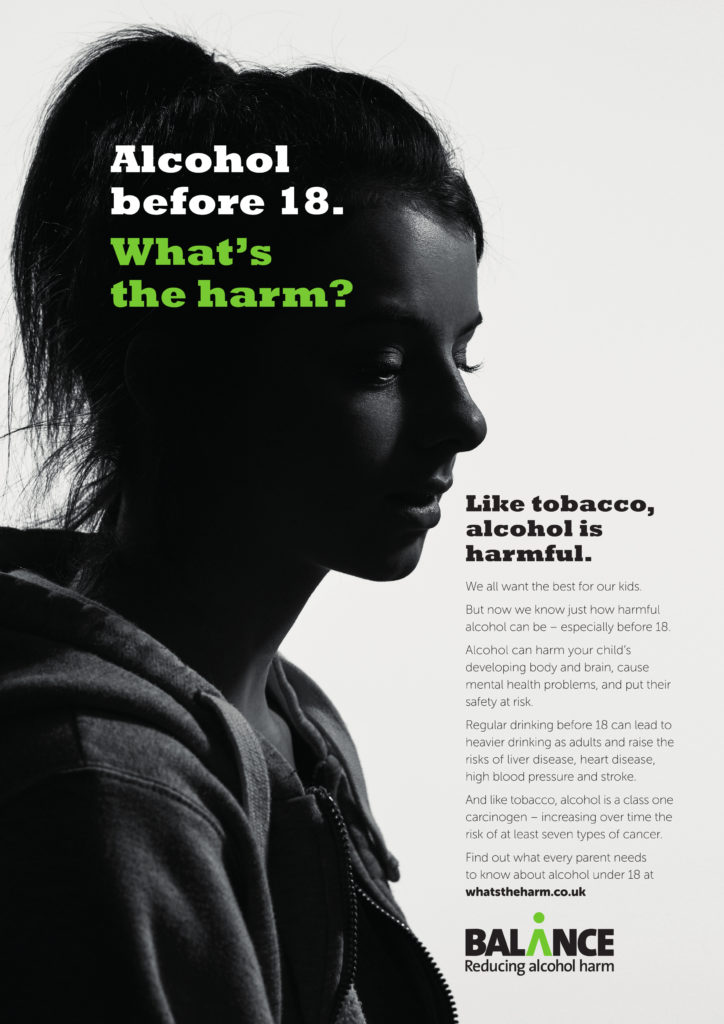
Evidence is clear now that introducing children to alcohol – especially before 15 – can:
Alcohol is a group one carcinogen[i] and a direct cause of seven types of cancer, including bowel and breast cancer[ii]. Alcohol is driving nearly one million hospital admissions a year among adults from heart disease, mental health and behavioural disorders due to alcohol, cancer and liver disease.
Alcohol use can also increase the risk of children becoming involved in risky situations, such as violence and disorder, drug and tobacco use and unsafe sex.
Chief Medical Officer Guidance is that no alcohol under 18 is the healthiest and safest option but if children do drink, it should not be before the age of 15. If children aged 15-17 do drink it should only be in a supervised environment, and no more than once a week.
Although deaths from alcohol are at record level, more young people and adults are now choosing not to drink for better physical and mental health.
Susan Taylor, Head of Alcohol Policy for Balance, said: “Every parent and carer wants the best for their child. But alcohol use during teenage years can harm physical health and mental health.
“The alcohol industry has long promoted alcohol as a normal part of a happy, successful life but in reality, too many adults and children are ending up in hospital, in A&E or with real problems in their lives because of alcohol.
“Hospitals are now seeing people at a younger age with alcohol-related conditions such as liver disease. Alcohol intake can catch up with people much sooner than we sometimes think.
“The longer we can delay drinking alcohol in the lives of our children, the better. The younger they drink, the more likely they will develop a taste for it and encounter all the risks.”
The law is clear that buying alcohol under 18 or selling it to children under 18 is illegal. Supplying children with alcohol undermines these important age of sale laws which are there to protect both children and local communities.
Information for parents and a FREE guide about talking to children about alcohol is available at Whatstheharm.co.uk
Watch the campaign film:
[i] https://www.who.int/europe/news/item/04-01-2023-no-level-of-alcohol-consumption-is-safe-for-our-health
[ii] https://www.ndph.ox.ac.uk/news/new-genetic-study-confirms-that-alcohol-is-a-direct-cause-of-cancer
All pharmacies offer walk-in appointments, with no need to book in advance, and consultations are carried out in private with a trained pharmacist. Pharmacists can help whether someone is starting the pill for the first time or continuing an existing prescription.
A yearly check-up will take place, usually when returning for the next supply.
The service is free and confidential for everyone, including those under 16. Personal information will not be shared unless there is a serious concern for safety or wellbeing.
Learn more and find your nearest participating pharmacy here:
Find a pharmacy offering the contraceptive pill
Watch this short film about the new service:
The Public Health team at South Tyneside Council has launched a new online survey to try and find out more about what young people in the borough think about vaping.
It is estimated that 5% of teenagers in the North-East regularly use e-cigarettes, 15% higher than the national average. Girls are more likely to vape in the region, with 7% regularly vaping, compared to 4% of boys.
Youth vaping is on the rise too; recent research has shown that the proportion of 11 to 17-year-old e-cigarette users doubled from 3.3% in 2021 to 7.6% in 2023 nationally.
Read an article about this here: https://www.shieldsgazette.com/news/north-east-among-top-uk-hotspots-for-youth-vaping-according-to-data-4525429
The short questionnaire will only take a few minutes to complete and can be found here.
Please take part and help the team improve information for young people about the dangers of vaping.
In Healthwatch’s latest research, we focused on trans and non-binary people’s experiences with GPs – often the gateway to the healthcare system – to learn some of the answers to those questions.
People told us about administrative hurdles and harmful assumptions about their experiences. The impact of poor care could be serious, with over half of respondents to our self-selecting survey, almost 1,400 people, only slightly confident or not at all confident about using their GP.
But people also shared stories of good care, in which staff treated them with respect and compassion, and took the time to understand the care they needed.
By following our recommendations, GP practices and healthcare decision-makers can take important steps towards ensuring good quality care is a reality for all.
Trans and non-binary people can have negative experiences at the GP front door.
They may risk being outed or made to feel uncomfortable when they book, check in for, or are called in for appointments. Nearly a quarter of those who responded to our survey disagreed that GP receptionists treated them with respect.
They face administrative hurdles if they want to change their name, pronouns or gender markers on their GP record.
Nearly 30% of those who had changed their gender marker said they had lost access to their previous NHS record. There were disruptions to prescriptions, which 16% had experienced, and 18% were misgendered in NHS written communications. Changing gender markers also meant people risked making it harder to access to sex-specific care, such as cervical screening. Over one in five respondents (21%) who’d changed their gender marker said the NHS stopped offering them this sort of care.
They may have lower satisfaction with GP care than the general population.
Just over half (53%) of people answering our survey rated their GP as good or very good for the general care services they had sought. This is lower than the proportion of trans and non-binary respondents (68%) and overall respondents (74%) responding positively to a similar question in the most recent national GP Patient Survey. Less than a third of respondents (32%) rated their gender-affirming care from their GP as good or very good.
They experience problems accessing gender-affirming care via their GP due to different interpretations of various guidelines.
Less than a third of respondents who had tried to access hormone replacement therapy (HRT) via their GP told us they hadn’t experienced any delays, stops, or interruptions.
Trans and non-binary people must be treated by their GP surgeries with respect, dignity and privacy, and without discrimination, in accordance with their rights.
GP surgeries should ensure staff understand and know how to act in accordance with relevant legislation, and that all patients feel welcomed and respected.
Trans and non-binary people should be protected from a loss of sex-specific healthcare (such as invitations for screening) if they change their gender.
The practice of giving people a new GP record and NHS number when people change their gender marker should end. Instead, a single NHS record should include details of both biological sex and any change to gender identity. This should be done in a way that ensures privacy, dignity and respect, and allows clinicians to provide the right clinical care. The Department of Health and Social Care should also improve IT and screening systems to ensure trans and non-binary people don’t miss out on sex-based healthcare.
The Government should develop a new LGBT+ strategy.
This should include steps to address the holistic needs of trans and non-binary adults. It should provide clarity on shared care arrangements and bridging prescriptions, and take action to cut long wait lists for gender dysphoria clinics and support people while they wait.
Healthwatch South Tyneside was one of ten local Healthwatch to help gather responses for the Healthwatch England report and 1,393 people aged 18+ who identified as trans, non-binary or another diverse gender identity, or considered themselves to a have a trans history, took part.
Interested in learning more? You can download the full report below. If you require this report in a different format, please contact us by emailing enquiries@healthwatch.co.uk or calling us on 03000 683 000.
Latest news
21.04.2026
Help others understand health advice and receive a £25 voucher

20.04.2026
Tell us about your experience of hospital discharge
16.04.2026
Athletics legend Steve Cram inspires NHS staff to get active

08.04.2026
Bereaved families invited to take part in new research study

08.04.2026
New mental health support service for LGBTQ+ young people aged 11–25

07.04.2026
Young people waiting up to two years for mental health support
Quick online NHS services

Have your say
Let us know about your recent experience of health and social care services.
Let us know